Category Archives: ENCOURAGEMENT

Look upward for all – Part Two, #godindailylife, #thebibleindailylife

Let me like the birds
look upward for all,
knowing my Father
will heed every call.

Knowing He sees
and He knows and He cares
keeps me in peace,
dispels dark despair –
That fear that comes in
when my eyes turn to me
but flees when I know
that Jesus loves me|

For He Who has made
and watches each bird
surely has answered.
Yes! He has heard!

PART ONE: In Part One, we looked at the Biblical basis for Stanzas One and Two of the little poem above. In Part Two, we will examine the Bible verses that undergird Stanza Three.

STANZA THREE:
For He Who has made
and watches each bird
surely has answered.
Yes! He has heard!

I can encourage myself while I wait, actively knowing that He has heard and is working. Consider 2 Chronicles 16:9

“For the eyes of the Lord run to and fro throughout the whole earth to show Himself strong in behalf of those whose hearts are blameless toward Him. You have done foolishly in this; therefore, from now on you shall have wars. (AMPC, emphasis added).

King Asa’s story, recorded in 2 Chronicles 15:2-16:14, is one of triumph, tragedy, obedience and disobedience. Early in his reign, Asa “did what was right and good in the eyes of the Lord” (2 Chronicles 14:2). God gave Asa’s kingdom peace as Asa led them in following God. Then God gave him great victory against a vast army because Asa called on and depended on the Lord. See his prayer in 2 Chronicles 14:11.

“Asa cried to the Lord his God, O Lord, there is none besides You to help, and it makes no difference to You whether the one You help is mighty or powerless. Help us, O Lord our God! For we rely on You, and we go against this multitude in Your name. O Lord, You are our God; let no man prevail against You!” (AMPC).

After that victory the prophet Oded warned King Asa “The LORD is with you when you are with Him. If you seek Him, He will be found by you, but if you forsake Him, He will forsake you.” (2 Chronicles 15:2). Asa heard this message, “took courage” and led his kingdom in God-honoring spiritual reforms.

Yet, in his later years, when King Baasha came against him, Asa’s heart did not remain blameless. Asa used the silver and gold from God’s very temple to purchase help from Damascus. Hanani, the seer, reminded Asa of the time vast armies had come against him. Then Hanani said,

“YET, because you relied then on the Lord, He gave them into your hand. For the eyes of the Lord run to and fro throughout the whole earth to show Himself strong in behalf of those whose hearts are blameless toward Him. You have done foolishly in this; therefore, from now on you shall have wars.” (2 Chronicles 16:8-9, AMPC, emphasis added).

Sadly, Asa grew angry and remained angry the rest of his days, not even seeking help from the Lord for the disease that ended his life.

A stern and loving warning. I consider this a stern and most loving warning from the Lord. It is an impassioned, urgent plea to depend on His endless care and watchfulness over His believing children rather than depending on the world or letting despair push us into fear and disobedience.

God wants us to know that He, Who made and sustains all that is and ever will be, is looking over the entire earth, eager to demonstrate His power for those of His children whose “hearts are blameless toward Him.” Picture a father, hovering over a toddler taking his first steps, ready to catch that little one the instant he wobbles.

What is that father doing? That father is busy with the business of being a good, good father. He is hovering, eager to demonstrate to his little child that papa will catch him so that his child will feel secure enough to learn to walk on his feet–which is necessary for that little child to be all God has purposed–rather than crawl.

man wearing black crew-neck t-shirt standing and about to carry baby

Photo by Zack Calahan on Unsplash

God is like that with us. He is watching every moment, eager to build our faith in Him so that we will learn to walk in His ways, strong, bold and confident in our God. Why? Because only by walking in His ways are we safe, only by walking in His ways can we find the abundant life He died to give us, that matchless eternal life that starts in this present world and endures throughout eternity (John 17:3).

Throughout His Word, God tells us He is a good God and is watching over us. One of many such comforts in the Bible–God’s love letter to us–is Psalm 145:9: “The Lord is good to all, and His tender mercies are over all His works (the entirety of things created).”

 I repeat: God is watching, eager to help us. The magnificent descriptions of nature in the book of Job tell us that God is watching over every creature. In Chapters 38-42 of Job, God tells us in detail how He sustains the earth, knows when mountain goats and deer give birth, gives “the horse his strength and clothes his neck with a flowing mane” (Job 39:19), tells hawks and eagles when to soar, and on and beautifully on.

Why do you think God devoted so much space in the Bible to showing us His care for His earth and His non-human creatures? Why did Jesus tell us we are “worth more than many sparrows”?

Dear friend, creation itself speaks of the goodness of God, His glory (Psalm 19:1-4). God wants us to know and be constantly reminded that He is with us, will care for us, and eagerly longs to walk closely with us. Nature speaks. We are surrounded with proof of His love because God wants to reassure and comfort us with that truth.

I can choose to be with God, even in dangerous times and in seasons of waiting.  God IS with us but we must choose to be with Him—to obey His Word and depend on Him– if we want the full life He has planned for us. Recall God’s warning to Asa in 2 Chronicles 15:2. If we want to experience God’s nearness, we must seek Him and obey Him – with all that is within us.

Disobedience brings external and internal consequences. Our life on earth will include troubles (John 16:33). And some things in life require waiting on God to act on our behalf. The enemy seeks to “steal, kill, and destroy” the abundant life Jesus died to give us. Satan often attacks through circumstances, thoughts, and delays. And the world and our flesh also cause us great troubles sometimes. Our part is to stand firm in our faith, and keep standing. God warns us over and over about the dangers of walking away from Him. One such warning is in the story of King Asa.

When God warned that if Asa forsook Him, He would forsake Asa, God was not saying He would forsake or change His character. Nor does it mean God would forsake His covenantal promises. Jeremiah 3:14 reassures us that God pursues us when we slide back from following Him “Return, O backsliding children,” says the Lord; “for I am married to you. I will take you, one from a city and two from a family, and I will bring you to Zion.” (NJKV).  But if we forsake God, if we stop obeying Him and following Him with whole-hearted devotion, we will reap what we have sown (I Corinthians 3:8).

If I sin by outright disobedience or by failing to do what I know I should (James 4:17), I will experience external consequences, but we are talking here about internal consequences.

What are the internal consequences of disobedience? One is that my conscience becomes guilty. My mind may try to ignore the guilty feelings but my innermost being, my spirit, knows. Then, like a child who is uncomfortable in his father’s presence because he fears punishment, I am afraid to draw near to God. My sins separate me from fellowship with Him, just as their sin made Adam and Eve hide (Genesis 3:8). We hide from Him and temporarily forget about His mercy and forgiveness or we do not believe the lie we hear in our heart that God does not feel that way about us.

But, praise God, in all of that God has not changed – we have. God continues to long for reconciliation with us. Ponder Isaiah 59:1-2. “Behold, the Lord’s hand is not shortened, that it cannot save; nor His ear heavy, that it cannot hear. But your iniquities have separated you from your God; and your sins have hidden His face from you, so that He will not hear.”  (Isaiah 59:1-2, NKJV, emphasis added).

If I persist in my sin, if I harden my heart – oh what great tragedies I will find! Yet, even when we are obstinate, God is eagerly looking and longing to be gracious to us and show us compassion. (Isaiah 30:18). He says, ““Repent, then, and turn back, so that your sins may be wiped away, that times of refreshing may come from the presence of the Lord” (Acts 3:19).

Micah 7:18 tells us God delights in showing mercy. “Who is a God like you, who pardons sin and forgives the transgression of the remnant of his inheritance?  You do not stay angry forever but delight to show mercy.” (NIV, emphasis added)

“Return to Me, and I will return to you.” (Zechariah 1:3; Malachi 3:7).  When we lose awareness of His closeness, if we humble ourselves and ask Him, He is faithful to His promises and will show us where we stepped away – whether that was from deliberate sin, or the weaknesses of our flesh, like when we let fear determine our actions.

Fear can control us. Fear controls us when we fail to speak to someone about Jesus when God puts the urge to do so in our heart. Fear controls us when we stay with a lunch group where people are being vulgar or profaning God’s name rather than walking away.

Another way we can step away from God because of fear is when we turn to something other than God when we feel fear. When I am afraid or anxious about something, for example, if I try to calm myself with anything other than God—overeating, alcohol, drugs, distracting entertainments—I am depending on those things, not God. I am making those things my idol.

When I feel afraid, I need to trust God (Psalm 56:3), resist the devil (James 4:7), and then keep my mind fixed on God through praise and thinking deeply on some Bible truths that apply to my situation. I can look up Scriptures about peace, God’s provision, healing, etc.

After I have turned to God, and given Him a chance to meet my need, it can be helpful to occupy my mind by talking with others, enjoying a bit of wholesome entertainment, being good to myself in healthy ways, etc. There is nothing wrong with those things in moderation. And it is always, always wise to keep my focus on God’s Word all day long. God’s Word is part of the spiritual armor God gives His children (Ephesians 6:10-18). I have learned that when I keep my mind on God’s Word, the nine good fruits of the Spirit (Galations 5:22-23) overcome negative thoughts and feelings.

No matter in what way we have stepped away from God, God is eager to restore us and hold us close, in His loving arms. God says: “Come now, and let us reason together,” Says the LORD, “Though your sins are like scarlet, They shall be as white as snow; Though they are red like crimson, They shall be as wool. (Isaiah 1:18, NJKV).

A silhouette of an adult holding a child against a warm orange sky

Photo by Arifur Rahman

How good God is to give us the “desire and power to do what pleases Him”! (Philippians 2:13, NLT). That includes obeying and trusting Him in difficult times and when we have to wait. That also includes the ability to live without fear.

Only holy fear. We are commanded to live a life of holy fear, that is, to live in reverence and awe for God as Ecclesiastes 12:13 and Deuteronomy 10:12, among other Scriptures, tell us.

But God does not want us to live in any other fear. “For the Spirit God gave us does not make us timid, but gives us power, love and self-discipline.” (2 Timothy 1:7, NIV) Through numerous Scriptures, God tells us what to do when we do feel afraid: Turn our heart to Him and actively trust. As explained earlier, we are to humble ourself before God, resist evil in every form, stand and keep standing. “Therefore put on the full armor of God, so that when the day of evil comes, you may be able to stand your ground, and after you have done everything, to stand.” (Ephesians 6:13)

Below is a link to an excellent teaching on fear by Joyce Meyer. Read it and apply it. You might also look up other teachings by Joyce Meyer on fear, if it is a particular challenge for you. God never wants us to live in the fleshly fear the enemy causes. Free from Fear | Joyce Meyer Ministries

Building confidence in His faithfulness. We have to know Him well enough to trust Him. That trust comes from studying the Word and through experiencing His faithfulness and power to act on our behalf as we pursue Him (Psalm 91). It comes through experiencing His loving discipline (Hebrews 12). It comes as He guides us with consequences of our actions, through “sanctified experiences”, His “righteous judgments [Your decisions against and punishments for particular lines of thought and conduct]. (Psalm 119:7, AMPC).

It can be hard to trust God early in our walk with Christ but, as we press on to maturity, it becomes easier. Nonetheless, so long as we live on this earth, times will come when it is hard to trust God. But, praise our mighty King, He remains the same and so does His power to save His believing children. “I am the LORD, and I do not change. That is why you descendants of Jacob are not already destroyed.” (Malachi 3:6, NLT). Yes, even to “our gray hairs and old age” we can say:

“What time I am afraid, I will have confidence in and put my trust and reliance in You. By [the help of] God I will praise His word; on God I lean, rely, and confidently put my trust; I will not fear. What can man, who is flesh, do to me?” (Psalm 56:3-4, AMPC)

Is fear sin? It is not sin to feel fear. It is sin, however, when we let fear push us to do something against God’s will. And God has given us a multitude of Bible truths, such as the ones we’ve been studying, that will keep us living in peace.

Have you meditated on some of these truths, this manna, long enough to have them hidden in your heart? If not, google “Scriptures about peace”, pick the ones that speak most clearly to you and keep them in front of your eyes day and night until they are “hidden in your heart.” (Psalm 119:105). If you do that, God’s Word will “transform you into a new person by changing the way you think.” As He says in Romans 12:2 “Don’t copy the behavior and customs of this world, but let God transform you into a new person by changing the way you think. Then you will learn to know God’s will for you, which is good and pleasing and perfect.” (NLT, emphasis added).

Then, when the enemy attacks with fear or delays, you will turn your eyes to Jesus, resist that fear, keep your mind focused on God and His truths and walk in victory, as God intends. Even in dire circumstances, we can say, with Paul “No, in all these things we are more than conquerors through Him who loved us.” (Romans 8:37, NIV).  And “ I have strength for all things in Christ Who empowers me [I am ready for anything and equal to anything through Him Who infuses inner strength into me; I am self-sufficient in Christ’s sufficiency] (Philippians 4:13, AMPC).

I can live daily life victoriously as God intends for me. As Daniel 11:13b says “the people who know their God shall be strong, and carry out great exploits.” Daniel 11:31b, NKJV).

I can look upward to God for all things, staying in peace as I remind myself that my God loves me, my God watches me, and my God hears and heeds my call. What a blessing!

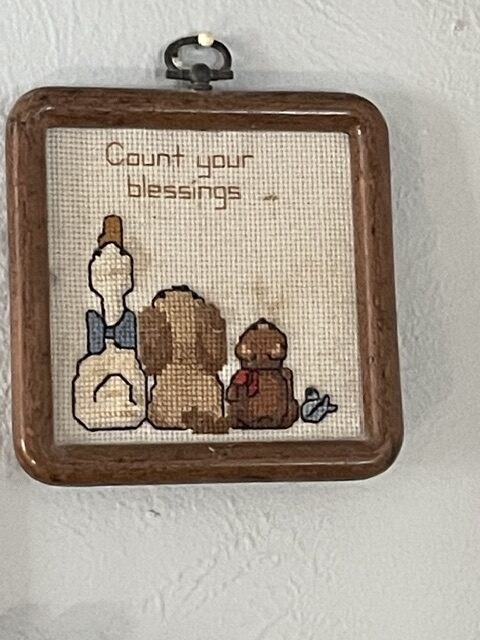
The story behind that little plaque. The little plague at the start of this blog post is a treasured reminder of God’s love and faithfulness. My beloved daughter did the cross stitch when she was a young girl. For more than 45 years, God has never once failed me in any way as I’ve loved Him and followed Him. He will do the same for you. “God does not show favoritism. (Romans 2:11, NLT.)

Pray with me.

Oh, our gracious, compassionate and loving Lord! How we praise You for Your love and faithfulness toward us, Your little children! Open our eyes to see Your blessings all around us. Teach us how to show our gratitude to You and how to demonstrate the affection we feel in our hearts for You. You are such a good, good Father, Lord, far beyond the ability of our words to express.

Show us how to love You more, Lord. Unfold Your Word to us as we study, for we know that Your Word shows us how to love You. In the matchless name of Jesus, we present these requests to You, with grateful and affectionate praise.  Amen, Lord, amen!

silhouette of a man and a boy on the seashore

Photo by Tim Mossholder on Unsplash
Look upward for all – Part One, #godindailylife, #thebibleindailylife

Let me like the birds
look upward for all,
knowing my Father
will heed every call.

Knowing He sees
and He knows and He cares
keeps me in peace,
dispels dark despair –
that fear that comes in
when my eyes turn to me
but flees when I know
that Jesus loves me

For He Who has made
and watches each bird
surely has answered.
Yes! He has heard!

Part One explores the Biblical basis for Stanzas  One and Two.

STANZA ONE
Let me like the birds
look upward for all,
knowing my Father
will heed every call-

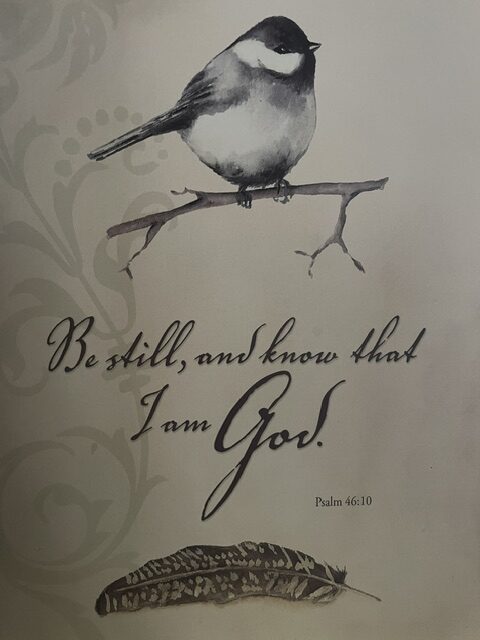
I can be like the sparrow. Many years ago, a cherished friend gave me the beautiful tray pictured above. It stands on my kitchen countertop, a prominent and constant reminder to trust God because, as Jesus said, I am “worth more than many sparrows.”  (Matthew 10:31).  This well-known verse was part of what Jesus said to His disciples when He sent them out on their own, knowing they would face persecution. Earlier, in the Sermon on the Mount (Matthew 5, 6 and 7) Jesus had already taught them not to worry, saying that God feeds the birds even though they do not store up food into barns (Matthew 6:25-27). At that time, Jesus also said:

28 “And why worry a0bout your clothing? Look at the lilies of the field and how they grow. They don’t work or make their clothing, 29 yet Solomon in all his glory was not dressed as beautifully as they are. 30 And if God cares so wonderfully for wildflowers that are here today and thrown into the fire tomorrow, he will certainly care for you. Why do you have so little faith?

31 “So don’t worry about these things, saying, ‘What will we eat? What will we drink? What will we wear?’  (Matthew 6:28-31, NLT)

Jesus then gave all His disciples – the original twelve and us as well– a promise that makes it easier to trust God. “Seek the Kingdom of God above all else, and live righteously, and He will give you everything you need.” (Matthew 6:33, emphasis added).

A worrying sparrow? A worrying sparrow would sit on a branch all day, fretting and fearful, and would soon die from thirst and hunger. God gave sparrows the instinct to look to Him by pecking the ground. That is instinctive behavior for sparrows. They look to Him by doing something.

In addition to instincts, God  gives His beloved human beings a mind and heart that can understand and apply His Words. That is how we look to Him. In Matthew 6:33 Jesus clearly states a principle for living – put God first in your life, obey Him in everything, and He will supply all that you need.

Consider Psalm 145:13-16:

“Your kingdom is an everlasting kingdom, and your dominion endures through all generations. The Lord is faithful to all his promises and loving toward all He has made. 14 The Lord upholds all who fall and lifts up all who are bowed down.
15 The eyes of all look to you, and you give them their food at the proper time. 16 You open your hand and satisfy the desires of every living thing. (NIV, 1984, emphasis added).

Be comforted by more promises as you meditate on Psalm 145: 17-20.

17 The Lord is righteous in all His ways and faithful in all He does.
18 The Lord is near to all who call on Him, to all who call on Him in truth.
19 He fulfills the desires of those who fear Him; He hears their cry and saves them.20 The Lord watches over all who love Him, but all the wicked He will destroy. (NIV,
emphasis added).

God wants us to have confidence — to be perfectly convinced and actively aware–that He will hear every call. And He wants us to be busy each day doing good, just like Jesus did, everywhere He went. Consider this verse: “Trust (lean on, rely on, and be confident) in the Lord and do good; so shall you dwell in the land and feed surely on His faithfulness, and truly you shall be fed. (Psalm 37:3, AMPC). That word “so” makes this sentence an if/then teaching. If you follow the first part of the verse, by doing those things, then you will have the second part. Selah!

STANZA TWO
Knowing He sees
and He knows and He cares
keeps me in peace,
dispels dark despair –
that fear that comes in
when my eyes turn to me
but flees when I know
That Jesus loves me.

I can keep my mind fixed on Him. It is this active aspect of trust, this keeping our minds confidently fixed on God, that brings peace. Consider Isaiah 26:3-4:

3 You will guard him and keep him in perfect and constant peace whose mind [both its inclination and its character] is stayed on You, because he commits himself to You, leans on You, and hopes confidently in You.4 So trust in the Lord (commit yourself to Him, lean on Him, hope confidently in Him) forever; for the Lord God is an everlasting Rock [the Rock of Ages]. (AMPC, emphasis added).

A man holding a child up in the air

Photo by Holly Landkammer on Unsplash

And how do we develop confidence in God so that we can trust Him? By obeying His Word and thereby giving Him the opportunity to show Himself strong on our behalf (2 Chronicles 16:9). Obedience is how we get to know His character. A little boy is delighted when his father tosses him in the air because he has felt his father’s strong, capable arms before. And that little boy knows his father adores him.

If we are not obeying God like we know we should, we are not walking with God and we are not giving Him chances to demonstrate His matchless character to us. Besides that, it is hard to trust Him because our spirit knows we are not right with Him. Deep inside we feel unsettled.  We are walking in darkness. Read 1 John 1:5-7.

“This is the message we heard from Jesus and now declare to you: God is light, and there is no darkness in him at all. 6 So we are lying if we say we have fellowship with God but go on living in spiritual darkness; we are not practicing the truth. 7 But if we are living in the light, as God is in the light, then we have fellowship with each other, and the blood of Jesus, his Son, cleanses us from all sin.”

But if we are walking in the light–in all the understanding of God that we have–our conscience is clear, and we feel closer to Him. It is then easier to believe He will provide for us if we, for example, pay tithes or stop associating with unbelieving friends who influence us to sin. Obeying God gives us light, or understanding (Proverbs 4:18) and helps us trust Him.

Trust in God also drives out discouragement and fear. “God is light: in Him there is no darkness at all”. (1 John 1:5b, NIV).  Darkness always gives way to light. The two cannot coexist. Light always wins. God’s Word is light (Psalm 119:105, John 8:12).

When we keep our minds on God and meditate on a Scripture passage, we have truth inside our minds. We have God’s light guiding our spirit and soul. His Word then works to guide our next few steps and His Word gives guidance further on, along the path He desires us to walk. His Word is a light for our path.  We learn this in Psalm 119:105: “Your word is a lamp to guide my feet and a light for my path.” (NLT)

With God’s help, I can make fear flee.  One of the enemy’s main weapons is fear. It is useful to remember, as several have said, that fear is False Evidence Appearing Real. It may feel like something evil is controlling our emotions or finances or health, but Satan has no authority over the believer.  In Luke 10:19, Jesus told His disciples “Behold, I give you the authority to trample on serpents and scorpions, and over all the power of the enemy, and nothing shall by any means hurt you.” (NKJV, emphasis added).

Lions roar primarily to establish territory and to communicate with other lions. So, when a problem roars, so to speak, in your life you can resist that problem, knowing that God has given you, not the enemy, authority.

How to resist the enemy? Be humble before God, resist the devil, and move forward with faith. In both passages that teach this process (James 4:6-10 and 1 Peter 5:1-10), humbling ourselves before God is the first step in resisting the devil and causing him to flee.

Read 1 Peter 5:1-10. In Verse 5 Peter tells all his hearers to act with humility toward each other “because, ‘God opposes the proud, but gives grace to the humble.’” Peter then says, because of that, we are to humble ourselves before God and give all our cares to Him. Next, Peter warns:

 “Stay alert! Watch out for your great enemy, the devil. He prowls around like a roaring lion, looking for someone to devour. 9 Stand firm against him, and be strong in your faith. Remember that your family of believers all over the world is going through the same kind of suffering you are.” (I Peter 5:8-9, NLT)

When I first begin to feel fear or anxiety, I stop and exercise my authority over the enemy. I say something like, “Satan, James 4:6-7 says that if I submit myself to God and humble myself before Him and resist you, you must flee from me. So, in the mighty name of Jesus, I command you to flee!” Next, I follow Verse 8. I come near to God by sincerely repenting and turning from any sin I am aware of, trusting that God will lift me up.

Then, immediately, I fill my mind and mouth with praise and thanksgiving and promises of God’s faithfulness and love.  As I continue to keep my mind on God and the truths of His wonderful Word, having obeyed and humbled myself before God and resisted the devil and his thoughts, God comes near and keeps me in His peace (Philippians 4:4-7).

That knowing. When I know that Jesus loves me – when I consciously keep my mind on how much He loves me– my eyes are on Him, not whatever problems lie ahead or behind. Like a horse with blinders, I focus on Jesus, not problems, and God’s peace guards my heart (Philippians 4:4-7).  As Joyce Meyer so powerfully says “What you focus on grows.”  If I follow God’s directives to focus on good things, my peace grows. Selah!

Psalm 28:1 says, “The wicked run away when no one is chasing them, but the godly are as bold as lions.” When the enemy attacks with lies—when he tries to make me feel something is chasing me–I can be as bold as a lion if I am in right-standing with God, if I am walking in obedience.

Having many of God’s truths about His great love and provision hidden in my heart makes it easier to keep fear out of my life. If you have doubts about God’s love for you personally, google “Bible verses about God’s love” and meditate constantly on those verses until they are written in your heart and bubble up into your conscious thoughts when you need them.

In Part Two, we will look at the Biblical basis for Stanza Three:

For He Who has made
and watches each bird
surely has answered.
Yes! He has heard!


Help me do what I must, #godindailylife, #thebibleindailylife

Oh, help me, my Lord
to do what I must
to step out in faith,
to step out in trust . . .

and . . .

to know You are leading
although I can’t see
for, Lord, I am leaning
on You and not me.

Let’s consider the Biblical basis of these thoughts.

Stanza One:

Oh, help me, my Lord
to do what I must
to step out in faith,
to step out in trust . . .

We all sometimes resist doing what we need to do, whether that is to toss back the covers on Monday morning, greet coworkers with smiles, call for a job interview, or clean breakfast dishes for the thousandth time. Yet, we serve a mighty and a mighty loving God Who is ever present to help us do little as well as big things, all those rare as well as routine “musts” that can so easily render us immobile. We just have to humble ourselves and ask. He is eager to help. Ponder Isaiah 30:18 in the AMPC and see just how eager.

We can say, “Father, I need Your strength. I don’t want to do this but I am going to do this, trusting You for help. I am leaning and relying on You and being confident in You, which is what I know trust means.

silver and white analog alarm clock

Photo by Joan Tran on Unsplash

Stanza Two:
to know You are leading
although I can’t see,
for, Lord, I am leaning
on You and not me.

A prayer for when getting started is hard. Help me, Father, to remind myself that You have prepared this day for me and I can find joy in it. You always help me do whatever You command me to do, so I can choose to be glad and just do the next thing that needs to be done in my life.

Father, I am purposefully obeying Proverbs 3:5-6.  Although I cannot see it, I know You are working in my life, even in this inertia and listlessness.  Lord, I am relying on You and not my own understanding. I do strive, Lord, to act like I know You in everything I do, and this is one part of that. I am confident that You will guide my steps in this task and throughout this day, Father.

Thank You, Lord, for the privilege of being Your child. Thank You for teaching me how to live. Thank You for all the bold promises in Your Word, those bold promises that You are always with us, always leading us, always providing for us as we revere and worship You and wait for You (Psalm 33:18-22, AMPC).

Thank You for Your goodness and mercies and faithfulness. Thank You for Your patience when we fail. Thank You for letting us know that You always remember how frail we are, as You say so clearly in Psalm 103.  I know You will help me abide in the secret place today (Psalm 91). I know You will help me experience real joy. I know You are already giving me Your strength. .

I know when I rely on You, Lord, and not my own self, that is part of being humble. And as Proverbs 25:9 says about You, Father: “He guides the humble in what is right and teaches them His way.” (NIV)

A personal note:  Dear friend, I share real-world examples of applying Biblical principles to my daily life, for your encouragement and edification. That includes my many fears, failures and foibles! As believers, God commands us to have fellowship with fellow believers. See Hebrews 10:24-25, 1 John 1:7 and 1 Corinthians 1:9.  Though never a substitute, the written word can provide a supplemental form of fellowship as we share experiences.

So, what sparked the little poem above? This morning, I struggled to break through mental storm clouds of self-focus, frustration, and unfavorable feelings lingering from yesterday. Though I tried earnestly to trust God and keep a good attitude, I gave way to anxiety and irritation yesterday. I felt far from God. Following upon many days of special consciousness of His presence, this was deeply discouraging.

What happened yesterday? I had a cold the day before so still did not feel 100 percent, the directions app on my phone led me in circles for 45 minutes (I presume because of road construction). I arrived two minutes before the doctor’s office would have cancelled my appointment, then I waited a looooong time on the doctor. As I waited, I asked God to forgive me for the bad words that had slipped out in the car, but I was still so agitated when I got back home (after four hours!) that I flopped on the couch and rested, listening to my audible Bible then a book purely for entertainment. I had planned to write and study in the afternoon but that did not happen.

That evening, I felt far from God and angry with myself. Self-critical thoughts kept raining down – your little life does not make any difference, the ways you serve God are pathetic, you will never reach your goals, etc. etc. By grace, I had the presence of mind to deal with the devil as God tells me to.

So, I prayed something like, “Father, I know those thoughts are lies from the enemy of my soul, so I submit to Your guidance and do what Your Word says.” Then I said, “Satan, the Word of God says in James 4:7 that if I submit myself to God and resist you, you must flee. I am resisting you and I command you to flee.” Then, to keep my mind on God, I began speaking some of God’s truths out loud, like Matthew 10:42.

“Jesus. I know You said if we give even a cup of cold water to one of your disciples we will be rewarded. And in Matthew 13, You said the Kingdom of Heaven is like the tiny mustard seed, that grew into the largest plant in the garden. And in Matthew 17, You  said if we have faith as small as a mustard seed we can move mountains and nothing will be impossible for us. So, the little things I do for the Kingdom are important, they do produce results, eternal results. I know You see and You delight in all the things we do for you, Lord . . . “

I felt much better after that, yet somewhat bruised inside after the long hours of agitation, anger, and frustration. And getting started this morning was a challenge – until I set my mind to forget yesterday and move forward with today.

One thing I’ve learned about my most recent trip around this particular mountain on the path to maturity is not to expect perfection from myself, even and perhaps especially when I have, by grace, broken through to deeper maturity. I do not expect adult behavior from a child. Why should I expect perfect behavior from an imperfect person, i.e., me?  God does not.

The enemy sometimes seeks to stop spiritual progress with the paralysis of self-analysis. The remedy? Remind myself that God delights in me, that He earnestly remembers that we humans are just dust (Psalm 103) and that, as I trust in Him with all my heart, He is directing my steps (Proverbs 3:5-6).

In the light which that blessed truth provides, I can just move forward and do the next thing in the life before me, actively keeping in mind that God is with me, is helping, and will continue helping (Hebrews 13:5b, AMPC).

a black and white photo of a dirt road in the woods

Photo by Aleksander Korobuczk

The next step principle. The next step principle works in every circumstance for every believer – whether it means getting ready for the day at a challenging job, starting a load of laundry before your toddlers wake up, finishing that quarterly report, or climbing back on that forklift.

In doing the next necessary thing– in the obedience of doing whatever your hand finds to do with all your might and doing it as if for God– you will be blessed. As Deuteronomy 28:1-2 teaches us, obedience brings blessings. As you take the next responsible step in your life, you will find the joy and peace God has lovingly put in your path, as He tells us in Psalm 97:11.

“Light is sown for the [uncompromisingly] righteous and strewn along their pathway, and joy for the upright in heart [the irrepressible joy which comes from consciousness of His favor and protection].”  (AMPC)

Notice that light and joy are prepared ahead of us, along the path. To reach that point in the path and share that light and joy with God and others, we must take that next step and keep moving forward. In His strength, we can do it!  As Paul said, we can do everything, including endure severe hardship, because it is Christ Who gives us strength.

10 How I praise the Lord that you are concerned about me again. I know you have always been concerned for me, but you didn’t have the chance to help me.
11 Not that I was ever in need, for I have learned how to be content with whatever I have.
12 I know how to live on almost nothing or with everything. I have learned the secret of living in every situation, whether it is with a full stomach or empty, with plenty or little.
13 For I can do everything through Christ, who gives me strength. (Philippians 4:10-13, NLT)

God’s very little children. Friend, God has carefully prepared this very day for you, yes you! Like a loving mother He has, figuratively speaking, laid out your clothes, fixed you a healthy breakfast, and anticipates walking beside you as you find the good things He has prepared specifically for you.  This day of yours is important to God. He wants you to walk through this day with joy and awareness of His presence and provision.

At our most basic level, we are all God’s very little children. And we can live in the benefits of the Kingdom of God if we come to Him as little children do – humbly, acknowledging our need of Him by our very seeking Him – then yielding to His love, receiving what He offers.  I can only echo Kurt Kaiser’s lyrics: “Oh, how He loves you and me!”

a man and a little girl walking down a dirt road

Photo by Mohamad Hamdi

Unending mercies – Part 2 of 2, #godindailylife, #thebibleindailylife

trees under cloudy sky during sunset

Photo by Dawid Zawilah on Unsplash

God is Your Protector,
Provider, and Friend,
His love will not fail you.
His mercies won’t end.

for they are both new
each day and each hour
like the sun that arises
each morning in power.

Each morning Love shines,
drives darkness away
for the soul that is seeking
to walk in God’s ways.

for darkness (evil) must flee
when His children seek Him . . .
as surely as night
must flee when earth spins.

In Part One, we examined the Biblical basis for the first two stanzas of the little poem above. Those Bible verses included Psalm 103:11-14, Hebrews 13:5b, and Habakkuk 3:17-19.  In Part Two, we will consider the Scriptures on which the third and fourth stanzas are based.

STANZA THREE:
Each morning Love shines,
drives darkness away
for the soul that is seeking
to walk in God’s ways.

God’s power in our lives. God intends that every believer live a life of consistent victory over the darkness of sin. I see earth’s consistent victory over darkness as a parallel to the believer’s life. Like the darkness of night, trials and tribulations consistently come but as we resist and turn toward God, His light, like that of the sun, always, always, always pushes darkness away.

Why is that? The believer’s daily defeat over the darkness of “our flesh, the world and the devil” comes because of God’s power working in us (Ephesians 3:20) because God’s power gives us everything we need for life and godliness” (2 Peter 1:3). He has given us of His Spirit (1 John 4:13) and our “Father is greater than all” (John 10:9).

Trials come and trials go. God gets glory and does His work as we act according to the teaching of James 1:2-4.  As we walk through trials, we can choose to be glad, knowing that these earthly irritants are refining our faith and developing perseverance which, when finished, will render us “mature and complete, not lacking anything.”  Jesus warns that we will have “troubles, trials, distresses and frustrations” but Jesus says we can rejoice because He overcame “the world and deprived it of the power to harm us and He has conquered it for us.” (John 16:33, AMPC)

Also, consider Hebrews 13:5.  God has most emphatically promised He will always help us.

5 Let your character or moral disposition be free from love of money [including greed, avarice, lust, and craving for earthly possessions] and be satisfied with your present [circumstances and with what you have]; for He [God] Himself has said, I will not in any way fail you nor give you up nor leave you without support. [I will] not, [I will] not, [I will not in any degree leave you helpless nor forsake nor let [you] down (relax My hold on you)! [Assuredly not!] (Hebrews 13:5, AMPC)

For all these reasons, we can consistently win over darkness, be witnesses for Christ and press on to maturity. We will thereby not only glorify God and help others but we will store up eternal rewards, all things God desires for us.

How the light of God is perceived. How a believer reacts to light is radically different from how an unbeliever or a believer being convicted reacts. Though Paul did not write the first chapter in the book of James, which explains the right attitude about trials, he certainly understood about trials and how God can use them. In 2 Corinthians 2, just before verses 14-16 Paul talked about the hardships, or trials, of his ministry. Then Paul says “BUT” and describes how God always leads us in victory in Christ. As He does this, God uses us to spread the sweet, God-pleasing aroma that comes from knowing Christ everywhere we go.

Paul teaches us that, as this happens–as we keep following Christ through the dark times of life and let Him bring us back into the sunshine of better times — we are witnesses of Christ to the world. Then Paul teaches that people respond differently to the light of God. To those who are being saved, our witness of Christ (God’s light shining through us) is pleasant but to those who reject Christ we are “the dreadful smell of death and doom.” Our righteous life convicts those still controlled by the flesh and Satan. “The righteous despise the unjust; the wicked despise the godly.” (Proverbs 29:27, NLT).

lighted candle

Photo by Marc Ignacio on Unsplash

This is part of God’s design. Jesus tells us ““You are the light of the world—like a city on a hilltop that cannot be hidden.” (Matthew 5:14, NLT). He is telling us that the way we live should guide others to Him. In other words, our behavior should be obviously different from that of people who do not follow Jesus. Some will be attracted and some will be offended.

If  my righteous behavior convicts someone, that is good. In that case, someone is “offended” in a way that is spiritually productive. If my heart is filled with God’s love for others and a humble attitude toward my own failures, that love and humility in my heart will overflow (Luke 6:45) and color my words with God’s love. Suppose, for example, I say, “No, thank you, but I do not watch movies with sexual content.” If I say it gently and with the love of God uppermost in my heart, God can use the light that comes from my behavior to help that person.

However, if my behavior is motivated by pride, if I want to look good or be better than others, if I feel judgmental and sound superior Satan will use my pride to offend people in a spiritually harmful way and push them  away from the light of Christ.

For this and many other reasons, God hates pride (Proverbs 16:5, James 4:6).  We do well to study Scriptures about pride and humility. We do well to read strong books on the topic such as Humility by Andrew Murray and The Power of Humility, by R. T. Kendall.

 For the soul that is seeking. To return to the main subject of this blog post, how do we achieve that life of consistent victory over darkness? How do we, like the earth, consistently find the light when darkness overtakes us?  Simple.  We must seek God with our whole heart. It’s not possible for part of earth to spin and return to the light while the rest remains in darkness. It would, literally, rip the earth apart.  Give that thought an unhurried selah.

God does not require perfection but He does command us to love Him with all our heart, soul and mind. When a highly educated man asked Jesus what was the greatest law of Moses, Jesus replied, “‘You must love the Lord your God with ALL  your heart, ALL your soul, and ALL your mind.’ 38 This is the first and greatest commandment. 39 A second is equally important: ‘Love your neighbor as yourself.’[f] 40 The entire law and all the demands of the prophets are based on these two commandments.” (Matthew 22:37-40, NLT, emphasis added)

If we do that, if we seek Him whole-heartedly – and as consistently as the dark part of earth seeks light—and love each other, the pathway God has prepared fo us is one of consistent victory. It is embedded in the ways of God with His righteous children as surely as the rising of the sun is embedded in the ways of our solar system.

Consider these promises:

  • Proverbs 2:7 “He holds success in store for the upright, He is a shield to those whose walk is blameless” (NIV).
  • Psalm 112:4 “Even in darkness light dawns for the upright, for those who are gracious and compassionate and righteous.” (NIV).
  • Proverbs 4:18 “The path of the righteous is like the morning sun, shining ever brighter till the full light of day.” (NIV)
  • Psalm 97:11 “Light is sown for the [uncompromisingly] righteous and strewn along their pathway, and joy for the upright in heart [the irrepressible joy which comes from consciousness of His favor and protection]” (AMPC).
  • Our only appropriate response for these promises is to praise and thank Him, as the psalmist did in Psalm 97:12: “Rejoice in the Lord, you [consistently] righteous (upright and in right standing with God), and give thanks at the remembrance of His holiness.”  (AMPC)

Do you see? If we try whole-heartedly to follow Jesus, He will give us more light, more guidance. And we must have faith that God will do this. Hebrews 11:16 tells us “And it is impossible to please God without faith. Anyone who wants to come to Him must believe that God exists and that He rewards those who sincerely seek Him.“ (NLT.)  And if you cannot believe that yet, confess your unbelief to God and ask Him to help you with it, like the distressed father in Mark 9:24, who could not quite believe that Jesus would heal his beloved son.

STANZA FOUR

for darkness (evil) must flee
when His children seek Him . . .
as surely as night
must flee when earth spins.

a view of the earth from space at night

Photo by Anirudh on Unsplash

We must resist the darkness.  Standing on earth, it looks like the sun is rising up from the horizon and moving across the sky. Actually, we are seeing the effect of the earth rotating on its axis. Every 24 hours earth completes one rotation. As earth spins or rotates, part of the earth faces the sun and it is daytime there. And when that same part of earth turns away from the sun, when it turns to face the darkness, darkness returns.

We could say that earth overcomes darkness by resisting it, by exerting force in opposition to it. This brings to mind the well-known verse Hebrews 4:7 – “So humble yourselves before God. Resist the devil, and he will flee from you.” (NLT). God tells us if the believer opposes the devil, the devil will flee. This powerful truth gives strength, confidence and instruction to the believer. It is a spiritual law, a statement of how things operate in the spiritual realm. I interpret the relationship between sun and earth, light and dark in the natural world as an instructive analog of the relationship between God and man, life and death.

Let’s consider the context of James 4:7. We need to know why humbling ourselves before God is important and what God says it means.

Loving the world brings darkness. The first few verses of James 4 explain that the believers are having fights and quarrels among themselves and not getting prayers answered because their hearts are coveting things of the world. This is spiritual adultery and it places them in opposition to God. James sharply says to them:

“4 You adulterers! Don’t you realize that friendship with the world makes you an enemy of God? I say it again: If you want to be a friend of the world, you make yourself an enemy of God. 5 Do you think the Scriptures have no meaning? They say that God is passionate that the spirit He has placed within us should be faithful to Him.” (Other translations, such as The AMPC, say God yearns over us jealously.)

 The first of the Ten Commandments (commandments, not suggestions) says: “I am the Lord your God, who rescued you from the land of Egypt, the place of your slavery. You must not have any other god but me.” (Exodus 20:2-3, NLT). Then, the second Commandment forbids making idols because God is jealous for us and will not tolerate our affection for any other gods (Exodus 20:4-6).

 Because God cares passionately that we put Him first, He gives us what we need to do that. He gives us grace, most generously, so that we can be faithful to Him. Carefully read the next few statements James makes.

6 And he gives grace generously. As the Scriptures say, ‘God opposes the proud but gives grace to the humble.’ 7 So humble yourselves before God. Resist the devil, and he will flee from you. 

 8 Come close to God, and God will come close to you. Wash your hands, you sinners; purify your hearts, for your loyalty is divided between God and the world. 9 Let there be tears for what you have done. Let there be sorrow and deep grief. Let there be sadness instead of laughter, and gloom instead of joy. 10 Humble yourselves before the Lord, and He will lift you up in honor.” (James 4:6-10, NLT, emphasis added)

James earnestly tells his readers to pay attention to what Scripture says and realize they are an unclean, dirty spiritual mess because their divided loyalty has led them to be unfaithful to God. Why is James so harsh? Because it is the truth.

James tells them to stop lusting after the world and get their hearts right with God.  He reassures them that God has provided grace if they will sincerely, from the heart repent, to the point of tears and grief. This is not a casual thing! To shed tears and experience grief means that you have taken time to focus your whole attention on something. Taking God seriously and putting God first is as vital to the believer’s spiritual life as oxygen is to his physical life.

In indulging their desires for things of the world, the people James addressed have turned their backs on God, Who is Light.  They must realize the seriousness of their unfaithfulness to God and turn completely away from their former behaviors. Then, God will comfort those who sincerely mourn their sins and lift up those who have humbled themselves before Him. Perhaps James was thinking of Psalm 34:18: “The Lord is close to those who are of a broken heart and saves such as are crushed with sorrow for sin and are humbly and thoroughly penitent.” (Psalm 34:18, AMPC).

silhouette of kneeling man

Photo by Aaron Burden on Unsplash

Coveting things of the world is only one of many, many sins that can remain hidden for a long time and seem to be doing no harm.  I do well to make a daily habit of praying like David when his sin of adultery was uncovered.  “Have mercy on me, O God, because of your unfailing love. Because of your great compassion, blot out the stain of my sins.2 Wash me clean from my guilt.  Purify me from my sin. (Psalm 51:1-2, NLT).  I need to do this as a daily habit and also each time the Holy Spirit convicts me of any sin.

It is also essential that I ask God to reveal my hidden faults because I cannot see them. “How can I know all the sins lurking in my heart? Cleanse me from these hidden faults.” (Psalm 19:12, NLT).  As Jeremiah 17:9 teaches me: “The human heart is the most deceitful of all things, and desperately wicked. Who really knows how bad it is?”  Asking God to expose my hidden sin is one essential part of humility.

The natural rhythms of life.  Life is full of ups and downs. That is one of the truths we learn early in life. Solomon reflected on this in Ecclesiastes 3:1. He wrote “For everything there is a season, a time for every activity under heaven.” (NLT) He next lists 14 examples of contrasts – birth and death, planting and harvest, etc. Then in verses 9-13 he says that despite the burden of hard work we humans endure while on earth because of the fall, “God has made everything beautiful for its own time.”   

 And, God “also has planted eternity in men’s hearts and minds [a divinely implanted sense of a purpose working through the ages which nothing under the sun but God alone can satisfy], (Ecclesiastes 3:11b, AMPC). Solomon acknowledges that “even so, people cannot see the whole scope of God’s work from beginning to end” (3:11c, NLT) 

 Next, Solomon says: “So I concluded there is nothing better than to be happy and enjoy ourselves as long as we can. 13 And people should eat and drink and enjoy the fruits of their labor, for these are gifts from God.” (3:12-13, NLT).

 Because of the fall of man and the consequent curse (Genesis 2:16-17 and Genesis 3) life on earth consists of hills and valleys, seasons of light and seasons of dark. God’s desire is that we live in the constant light that comes from His presence. This indescribably glorious state is part of what we will experience in heaven. Until heaven, however, we must contend with the darkness of evil.

Despite this, Solomon says human life, with all its various seasons, is beautiful if we “see the whole scope of God’s work from beginning to end.”  If we take God’s viewpoint, we can stop fretting, and simply accept that life will be difficult at times.

I am not saying to passively accept sin, sickness, death or any other harmful or deadly thing. God teaches us that we overcome by the blood of the Lamb and the word of our testimony (Revelations 12:11). He teaches us that our words have power. Proverbs 18:21 tells us “The tongue has the power of life and death, and those who love it will eat its fruit.” (NIV).

I am saying settle down, accept the natural ups and downs of life, and serve God whole-heartedly, with joy and confidence in “the incredible greatness of God’s power for us who believe Him” (Ephesians 1:19b, NLT). This serving and loving God is the only thing under the sun that will satisfy that sense of purpose God plants in the heart of every man (Ecclesiastes 3:11).

A daily reminder of His faithfulness. God has promised that “as long as the earth remains, there will be. . . day and night” (Genesis 8:22, NLT). For as long as we live, we will always have that daily reminder of God’s faithfulness to us and the blessings of walking in the light that comes from knowing Him.

Remember, as we press on toward maturity, continuing to walk in all of His light that we have, that He gives us all that we need to live a holy life. 2 Peter 1:3 tells us: “By his divine power, God has given us everything we need for living a godly life. We have received all of this by coming to know Him, the one who called us to himself by means of his marvelous glory and excellence.” (NLT, emphasis added).

Rest assured that the “everything” in that verse includes the power to resist the darkness of sin because “. . .  God is working in you, giving you the desire and the power to do what pleases Him.” (Philippians 2:13, NLT)

In the strength of His grace, that grace He generously gives when we humble ourselves before Him, we will consistently reach out to Him, loving Him above all else, even when the darkness of the world, the flesh, or the devil overtake our frail, human hearts. We can reach out to Him with confident, expectant hope, like Jeremiah did.

The verses below came after Jeremiah complained and expressed self-pity. However, he next realized that focusing on his troubles made his soul “bowed down”.  Then Jeremiah remembered that God’s mercy and loving kindness are new, every day, like the sunrise. In the strength of that truth, Jeremiah turned his heart to God and God gave Jeremiah words that have since been an impenetrable fortress to millions:

“The Lord is my portion or share, says my living being (my inner self); therefore will I hope in Him and wait expectantly for Him.

25 The Lord is good to those who wait hopefully and expectantly for Him, to those who seek Him [inquire of and for Him and require Him by right of necessity and on the authority of God’s word].

26 It is good that one should hope in and wait quietly for the salvation (the safety and ease) of the Lord.”  (Lamentations 3:24-26, AMPC)

Dear friend, no matter your situation and circumstance, remember that “Even in darkness light dawns for the upright, for those who are gracious and compassionate and righteous.” (Psalm 112:4, NIV). When you turn your heart to God, you may see only a faint glimmer at first. But as you keep seeking Him, more light will be shed on you and you will walk in the full light of day. Such is the path of the righteous (Proverbs 4:18.)

silhouette of mountain during sunset

Photo by dominik hofbauer on Unsplash

Unending mercies – Part 1 of 2, #godindailylife, #thebibleindailylife

a view of the earth from space

Photo by Javier Miranda on Unsplash

God is Your Protector,
Provider, and Friend,
His love will not fail you.
His mercies won’t end.

For they are both new
each day and each hour
like the sun that arises
each morning in power.

Each morning Love shines,
drives darkness away
for the soul that is seeking
to walk in God’s ways,

for darkness (evil) must flee
when His children seek Him . . .
as surely as night
must flee when earth spins.

I can depend on God as surely as I depend on the sun to rise. The daily rising of the sun is a God-designed picture of His faithfulness and unchanging power to drive away all that Satan tries to do. The principle that God’s light always defeats the enemy’s darkness applies to each problem we face in this life on earth.

Let’s examine the Biblical basis for Stanza One.

STANZA ONE: 

God is Your Protector,
Provider, and Friend,
His love will not fail you.
His mercies won’t end.

God’s love is like that of a perfect father. What does a perfect human father do? He protects, provides for, guides, and loves his children. How perfectly our Heavenly Father does all that, and so much more! God is referred to as our Father more than 150 times in the Old and New Testaments https://shorturl.at/xv13J. Clearly, He wants us to think of Him that way. Consider Psalm 103:11-14.

11 For as the heavens are high above the earth, so great are His mercy and loving-kindness toward those who reverently and worshipfully fear Him.
12 As far as the east is from the west, so far has He removed our transgressions from us.
13 As a father loves and pities his children, so the Lord loves and pities those who fear Him [with reverence, worship, and awe].
14 For He knows our frame, He [earnestly] remembers and imprints [on His heart] that we are dust.  (Psalm 103:11-14, AMPC, emphasis added)

The sky speaks clearly, but without words, of the limitless nature of God’s love. (Psalm 19:1). Standing outside, you see that heaven’s blue canopy is unimaginably far beyond your grasp. You also see that earth, and you, are encompassed by sky. As the earth’s atmosphere protects earth, so God’s love protects those “who reverently and worshipfully fear Him.” (Psalm 103:17).

Did you ever notice how the sky seems to curve around us, like a huge inverted bowl? This makes us feel safe outdoors. We do not have to understand the geometry of tangents, circles, and the horizon. God designed the human eye so that we all perceive ourselves to be surrounded when we are outdoors. Yet, at the same time we feel free. We see this even in infants. Take a fretful infant outdoors and he calms. Why?

pouring water on person's hands

Photo by mrjnPhotography on Unsplash

God made earth a good place for His beloved human beings. The One Who made us planned that the basic elements of earth and of life itself are good. Consider the pleasure of drawing breath, the comfort of a gentle breeze or a human hand touching your cheek, the relief of sitting or lying down, how water soothes skin, the pleasure of rhythm—evident in the pulse of the ocean and the beat of music that mimics heartbeats heard in the womb. All these are channels through which God loves us. God is our exceedingly good Father, good far beyond all we can imagine.

Am I included in His perfect love? God wants us to know that His love, like that of a parent, is as measureless as the heavens for those who reverently and worshipfully fear Him.   “ But the mercy and loving-kindness of the Lord are from everlasting to everlasting upon those who reverently and worshipfully fear Him. . . ” (Psalm 103:17a,  AMPC)

How do you know you are included in that group of people? How do you know that you “reverently worship and fear Him”? “Fearing God means having a reverence for Him that greatly impacts the way we live. The fear of God is respecting Him, obeying Him, submitting to His discipline, and worshiping Him in awe.” https://tinyurl.com/42bc2b5h

However, that does not mean we have to be perfect. To fear God means to love Him and serve Him and follow Him with all your heart. My efforts to please God are as beautiful to Him as the misshapen mud pie a toddler plops into his mother’s outstretched hands. What God chooses to see is my love and my effort for Him. God knows—and I know—when I give Him my all. God knows—and I know—when I do something for Him out of my love.

Am I really forgiven? Am I included in His mercies? Because we human beings so often doubt that God has really forgiven our past sins, God uses another astonishing simile. He says He has separated our sin from us as far as the east is from the west. That includes every time we fell short of God’s best before we believed in and began living for Jesus. It also includes every time we fall short after we walk with Him — if we confess our sins.

Why is this so important? We all sin, and God will always be true to His nature. What is God’s nature? Psalm 103 tells us: The LORD is compassionate and merciful, slow to get angry and filled with unfailing love”. (Psalm 103:8, NLT).  Compassionate means God is aware of our distresses and is moved to help. Merciful means God is willing to forgive.

An essential truth to know as a believer is that God will forgive us and wash us clean from everything not pleasing to Him if we confess our sin. This promise is conditional. We must do our part by admitting to God that we have sinned.   Consider 1 John 1:8-10.

“If we claim we have no sin, we are only fooling ourselves and not living in the truth. 9 But if we confess our sins to him, he is faithful and just to forgive us our sins and to cleanse us from all wickedness. 10 If we claim we have not sinned, we are calling God a liar and showing that His word has no place in our hearts.” (NLT)

And regarding mercy, Psalm119 says: “Turn to me and have mercy on me, as You always do to those who love Your name.” (NIV, emphasis added).  Consider also Isaiah 30:18:

“ And therefore the Lord [earnestly] waits [expecting, looking, and longing] to be gracious to you; and therefore He lifts Himself up, that He may have mercy on you and show loving-kindness to you.” (AMPC, emphasis added).

sun peeping on ice mountain

Photo by Ravi Sharma on Unsplash

STANZA TWO:
For they are both new
each day and each hour
like the sun that arises
each morning in power.
(“They” means God’s love and mercy in Stanza One).

God knows we need reassurances. Our perfect Heavenly Father knows we need constant reassurance from Him because this present world is dark and our human nature weak. He knows our fleshly tendency to dwell on the past, the negative, and our inadequacies. And He knows how the enemy attacks.

Over and over God’s Word reiterates that His nature will never change and that He is and will always be faithful to His children. Perhaps this was the principle Jeremiah pondered upon while writing Lamentations, specifically Lamentations 3:22-23.  Perhaps Jeremiah was thinking that the daily rising of the sun illustrates God’s faithfulness as well as His power to drive all darkness away.  That principle applies to each hour as well as each day and season of our life.

Despite all that, I might ask: “But does He love me? Will He be merciful to me?   I have lived such a terrible life!”  The answer?  Yes! Yes! Yes!  God’s love and care for His children is dependable as dawn and everlasting as evening’s ease. And “God does not show favoritism.” (Romans 2:11, NLT). It is well worth the time to deeply ponder Hebrews 13:5b in the AMPC translation. Repeat this verse phrase by phrase until it imprints on your heart.

“. . . be satisfied with your present [circumstances and with what you have]; for He [God Himself has said,
I will not in any way fail you nor give you up nor leave you without support.
[I will] not, [I will] not, [I will] not
in any degree leave you helpless nor forsake nor let [you] down (relax My hold on you)! Assuredly not!]” (Hebrews 13:5b, AMPC)  (line spacing added for emphasis)

Could God put it any plainer?

But alas! My thoughts and my feelings! How do I fight fears and temptations and those terribly fickle feelings? If I put on and use the spiritual weapons God provides, as described in Ephesians 6:10-18, I will be able to stand strong against all the enemy’s attacks.

“10 A final word: Be strong in the Lord and in his mighty power. 11 Put on all of God’s armor so that you will be able to stand firm against all strategies of the devil. 12 For we are not fighting against flesh-and-blood enemies, but against evil rulers and authorities of the unseen world, against mighty powers in this dark world, and against evil spirits in the heavenly places.

13 Therefore, put on every piece of God’s armor so you will be able to resist the enemy in the time of evil. Then after the battle you will still be standing firm. 14 Stand your ground, putting on the belt of truth and the body armor of God’s righteousness. 15 For shoes, put on the peace that comes from the Good News so that you will be fully prepared 16 In addition to all of these, hold up the shield of faith to stop the fiery arrows of the devil] 17Put on salvation as your helmet, and take the sword of the Spirit, which is the word of God.18 Pray in the Spirit at all times and on every occasion. Stay alert and be persistent in your prayers for all believers everywhere. (NLT, emphasis added)

The believer’s spiritual battle occurs in the human mind, as that most excellent book by Joyce Meyer teaches. (See The Battlefield of the Mind, by Joyce Meyer.) God provides the armor but we must put it on. The shield of faith and the Word of God are essential in overcoming undesirable thoughts and feelings. He gives clear instructions on how to use the sword of the Spirit. God says keep His Word always in our minds and heart. He commands this in many places in Scripture.  (See Joshua 1:8, Psalm 1, and Philippians 4:8.)

God intends that the believer use His Word. God never forsakes those who seek Him “on the authority of His Word and the right of their necessity”. (Psalm 9:10, AMPC) Our need gives us the right and we exercise the authority of the Word when we speak it–in faith–over our problems.

Why does God tell us to always be meditating on His truths? Truth sets us free (John 8:32). Meditation is the way to get His truths into our mind. And that will make our minds new, more like His. Meditating and memorizing God’s Word frees us from the control of darkness. We are better able to stay on God’s paths, rather than the paths of darkness, where tormenting thoughts and temptations reside.

Why is that? When I stumble off God’s path and into the darkness of sin, the light that comes from His Word in my heart, “is a lamp to guide my feet and a light for my path.” (Psalm 119:105, NLT.) In His light, I see light. Psalm 36:9 the psalmist says to God: “For with You is the fountain of life; in Your light do we see light.” (AMPC)

Personal truths for daily life.  We do well to do personal Bible study for our specific personal needs. Find verses that address your need and then meditate on and speak those verses out loud. This will bring God’s strength into your daily life. Try it. For more information on meditation, see God’s Arsenal for Peace and Security at www.wordsofhopeandhealing.com

Four key truths I purposefully keep in my thoughts and in my mouth lately are:

  1. God will always love me. (Psalm 136:1)
  2. Nothing is too hard for God. (Jeremiah 32:170)
  3. His very nature is love, compassion, mercy, holiness and justice. And Malachi 3:6 assures me He never changes.
  4. The battle is His, not mine. When I do my part, He does the rest. (1 Samuel l7:47).

A recent personal struggle. For several weeks recently, I struggled greatly with negative thoughts and feelings, though I believe and routinely practice what I have written here. I could give a long list of genuine problems as the reason for the struggle, but the truth is I sinned. I fell short of God’s best for me. How?

Careful pondering of Jeremiah 15:19 tells me it is a vile thing to God when I have “suspicions concerning God’s faithfulness”.  Such thoughts are “unworthy and unwarranted.”

“Therefore thus says the Lord [to Jeremiah]: If you return [and give up this mistaken tone of distrust and despair], then I will give you again a settled place of quiet and safety, and you will be My minister; and if you separate the precious from the vile [cleansing your own heart from unworthy and unwarranted suspicions concerning God’s faithfulness], you shall be My mouthpiece. [But do not yield to them.] Let them return to you—not you to [the people]. (Jeremiah 15:19, AMPC, emphasis added).

What happened to me? At a deep level below conscious thought, I began to doubt God’s faithfulness. Why? New and continuing trials and responsibilities wore me down (Daniel 7:25). With weary body and spirit, daily times with God were not as strong as they needed to be. With that ever-present fog of weariness, I sensed His love, His joy and genuine motivation to love others less and less. Oh, I continued church and Bible study, contacting and encouraging friends, witnessing to strangers, and writing and studying. But heaviness lingered. Something was wrong.

My good habit of meditating on the Word throughout the day also slipped. Negative thoughts flooded in. Negative feelings followed. Little and big trials kept coming. Like the well-known frog in the kettle, my spiritual senses dulled as I spent time pondering my afflictions, instead of pondering God’s faithfulness (See Lamentations 3). Despite all that, I clung to God’s promises.

What got me out of that pit? The goodness and mercy of God. The Scriptures hidden in my heart gave light for my next few steps and illuminated the path ahead (Psalm 119:11). I knew what to do. Personal experience with God’s mercy (Psalm 91:14, AMPC) has taught me to trust Him and be confident. I know, I know, I know that He will never, never, never forsake me and that He will always, always, always help me (Hebrews 13:5b).

I had to prioritize my relationship with God above all else. (Proverbs 4:23). Some things, though apparently necessary, had to go.

So, day after day, I sat in my rocker by the window, reading His Word, praying, talking things over with God verbally and through journaling. I knew 1 John 1:9 promised that if I confessed my sin to God, He would be faithful and just to forgive my sin and to cleanse me from all unrighteousness (paraphrased). But I did not know, at first, where I had gone wrong.

a cat sitting on a window sill looking out the window

Photo by Elisabeth Jurenka on Unsplash

So, I kept “reasoning together with God”. I knew that in Isaiah 1:18 God invites us to talk with Him so that we can repent of our sins and be reconciled. “Come now, and let us reason together,” says the Lord, though your sins are like scarlet, they shall be as white as snow; though they are red like crimson, they shall be as wool.” (NKJ)

As I talked with God, He revealed my sins and where I failed. I believe He has restored me to right standing with Him. The essential element of that is guarding my relationship with Him above all else.

Have all the “troubles, sufferings and responsibilities” ended?  Far from it. But I am no longer standing still in terror. I am moving forward. I am making great spiritual progress upon those very mountains of difficulties that, temporarily, made me stumble.

So, I say with Habakkuk “The Lord God is my Strength, my personal bravery, and my invincible army. . .” (Habakkuk 3:19a, AMPC)

17 Though the fig tree does not blossom and there is no fruit on the vines, [though] the product of the olive fails and the fields yield no food, though the flock is cut off from the fold and there are no cattle in the stalls,
18 Yet I will rejoice in the Lord; I will exult in the [victorious] God of my salvation!
19 The Lord God is my Strength, my personal bravery, and my invincible army; He makes my feet like hinds’ feet and will make me to walk [not to stand still in terror, but to walk] and make [spiritual] progress upon my high places [of trouble, suffering, or responsibility]! (Habakkuk 3: 17-19, AMPC, emphasis added).

Dear reader, because of God’s faithfulness, you and I can, like Paul, forget the past and look forward to what lies ahead. We can all, through God’s great grace, “press on to reach the end of the race and receive the heavenly prize for which God, through Christ Jesus, is calling us.” (Philippians 3:14, NLT)

In Part Two, we will examine the Biblical basis for the third and fourth stanzas of the little poem at the start of this blog post. The main Scriptures on which those words are based are listed below.  Meditate on these Scriptures and see what God reveals to you.

God always leads us in victory — 2 Corinthians 2:14-16
The soul that is seeking — Hebrews 11:6; Proverbs 8:17
We must resist the enemy – James 4:5-10
The natural rhythms of life — Ecclesiastes 3:1-2

white cow on green grass field under white clouds and blue sky during daytime

Photo by Ray Aucott on Unsplash


God will help you to fight – Part Two, #godindailylife, #thebibleindailylife

In Part One we examined some Biblical passages and truths that will encourage us when we face trials as we seek to grow in our relationship with Jesus. We examined some Biblical principles found in the first two stanzas of “God Helps You to Fight”, given below.

When you make a new effort to walk in the light
be not surprised when the enemy fights.
Don’t grumble inside!  Don’t say in your heart
“It should just be all easy when I make a new start!
Why God, He should make this new thing a breeze
for He is the one I’m trying to please!”

            But be not discouraged!
. . . for that hater of humans is not authorized
to enter the soul where Jesus is prized,
for God, full of mercy, completely surrounds
the soul that will trust Him and grace does abound!

Though ‘round your frail heart the storm it may roar
the fear you feel now you’ll feel nevermore
if you will just stand and learn how to fight
by leaning on God with all of your might
by saying to God: “I’ll walk in Your light.
I’ll stand in Your peace for Yours is this fight.”  

In this blog post, we will look at Biblical principles underlying Stanza Three.

big waves crashing on lighthouse during daytime

Photo by Marcus Woodbridge on Unsplash

What is fear?  Read the definition of fear given below. Do you see that fear comes when we worry about what has not yet happened? Webster’s 1828 online dictionary defines fear as:

“A painful emotion or passion excited by an expectation of evil, or the apprehension of impending danger. Fear expresses less apprehension than dread, and dread less than terror and fright. The force of this passion, beginning with the most moderate degree, may be thus expressed, fear dread, terror, fright. Fear is accompanied with a desire to avoid or ward off the expected evil. Fear is an uneasiness of mind, upon the thought of future evil likely to befall us. (emphasis added.)

In His Word, God tells us not to fear over and over and over. Why? One reason is that He knows fear is a powerful weapon the enemy uses to “steal, kill and destroy” (John 10:10, KJV). The enemy always strives to harm us, rob us of the truth and ultimately aims to destroy us.  We can learn to conquer fear in whatever form it comes by following examples in the Bible.

Consider Jehoshaphat’s Example. King Jehoshaphat gave us a pattern to follow when he defeated the vast army of Ammon, Moab and Mount Sier.

[1]        Be in right-standing with God.

[2]        Pray for your situation – with humility about yourself and confidence in God.

[3]        Do not flee, rather face the situation and move forward.

[4]        Set your mind to trust and keep it set on trusting.

[5]        Take time to thank and praise God for the victories He gives you. In this way you will imprint them on your heart so that your memories of victory will speak to you in the future.

Stop now and read 2 Chronicles 20:1-30. Can you find the five steps listed above in the story? Here they are as I see them.

[1]       Be in right-standing with God. King Jehoshaphat was in right standing with God. 2 Chronicles 17:3 tells us “The LORD was with Jehoshaphat because in his early years he walked in the ways his father David had followed.” (NIV) We must all confess our sins quickly and maintain a right relationship with God. We must try our utmost to live in habitual fellowship with God, living in “conformity with His will in word, thought, and action.” (Deuteronomy 6:25, AMPC)

Staying in right standing with God is essential whether we are in an easy season or a season of challenges. As you study your Bible, notice how often God talks about righteousness. Notice how often His promises are linked to righteousness. One example is John 9:31: “Now we know that God does not hear sinners; but if anyone is a worshiper of God and does His will, He hears him.” (KJV).  See also Proverbs 15:29.

[2] Pray for your situation – with humility about yourself and confidence about God.

When a vast army threatened King Jehoshaphat, he “resolved to inquire of the LORD, and he proclaimed a fast for all of Judah” (v 3).  People responded from every town in the kingdom. It was a whole-hearted response, as our response must be when we seek God.

In front of the whole assembly, Jehoshaphat acclaimed God’s supreme power, described the specific situation, acknowledged his own helplessness and asked for God’s help. His concluding words were “O our God, will you not judge them? For we have no power to face this vast army that is attacking us. We do not know what to do, but our eyes are upon You.” (v. 12, emphasis added)

NOTICE THIS: The Bible says that right after Jehoshaphat prayed, the Lord reassured His frightened people. Speaking through the prophet Jahazel, the Lord comforted and reassured His desperate people. He said:

silhouette of kneeling man

Photo by Aaron Burden on Unsplash

“Do not be afraid or discouraged because of this vast army. For the battle is not yours, but God’s.  Tomorrow march down against them. . . You will not have to fight this battle. Take up your positions; stand firm and see the deliverance the LORD will give you. O Judah and Jerusalem. Do not be afraid; do not be discouraged. Go out to face them tomorrow, and the LORD will be with you.” (v.15-17).

Appropriately, Jehoshaphat immediately bowed before the Lord and all the people worshipped and praised the Lord “with very loud voice.”

[3]       Do not flee, rather face the situation and move forward. Then King Jehoshaphat led his army to the battle.  Go back and reread the definition of fear. Notice that fear can grow into dread then terror and fright. The more we yield to fear, the more it controls us. If we stay in the feeling of fear, we will start dreading then avoiding that thing we fear. Eventually, the mere thought of it brings terror and makes us do senseless things. When we feel terror, we take hasty, unwise actions or seek to numb the feelings through alcohol, drugs, overwork, hours of mindless entertainment, etc.

By thus fleeing the situation emotionally, we do not operate from the sound mind God gives us. “For God has not given us a spirit of fear, but of power and of love and of a sound mind.” (2 Timothy 1:7, NKJV) Other translations render that last word “self-discipline.”

When we are in the right state of mind–when we have not fled the scene emotionally by panicking–God can give us courage and self-control for whatever we face. Jehoshaphat kept trusting God and in his trusting God he found power to act with courage and also to impart that courage to others.

Early the next morning after his prayer of dedication, Jehoshaphat led his people toward the battle. He encouraged them by saying “have faith in the LORD your God and you will be upheld; have faith in His prophets and you will be successful.” (v. 20).

[4]       Set your mind to trust and keep it set on trusting. After Jehoshaphat encouraged his people to have faith in God, he “appointed men to sing to the Lord and to praise Him for the splendor of His holiness as they went out at the head of the army, saying: “Give thanks to the Lord, for his love endures forever.” (v. 21)

This was trusting God with confidence and showing it! And look at what God did.

As soon as the praising and singing began, God caused their enemies to turn on each other. Soon, that vast army was “only dead bodies on the ground.” So vast was the army that it took three days to pick up the plunder!

[5]       Take time to thank and praise God for the victories He gives you. After the battle, the people assembled there in the valley of Beracah (which means praise) and praised God. Then they returned home and went to the temple to continue praising and celebrating God “with harps and lutes and trumpets.”

God’s desire is for us to live in peace and to prosper. The only fear God wants us to have is the fear, meaning reverence and respect, for Him. God wants us to live in peace. Ponder John 14:27, John 16:33, Philippians 4:7, and Isaiah 26:3.

When God helps us conquer one fear, we are better equipped to conquer other fears. God longs to train us and give us power to use the spiritual weapons He has provided. He wants us to live a victorious life. So, God trains us by letting us see the negative results when we break His laws and the positive results when we follow them.

For example, one of God’s instructions or laws is His promise in Isaiah 26:3 “You will keep him in perfect peace, Whose mind is stayed on You, because he trusts in You.” (NKJV, emphasis added) When I’m in a fear-inducing situation, if I follow this guidance and keep my mind fixed on God and the truths in His Word, I have His peace. When I panic and let my mind run wild with fear, I have no peace. God thus instructs me through, by means of, His laws.

In the same way, a toddler learns how the law of gravity works when he drops a cookie from his high chair tray and the cookie hits the floor, out of his reach. By letting us experience the natural consequences of our actions, God teaches us. We are greatly blessed when God trains us how to keep ourselves calm in trials and wait on God to act.

“Blessed (happy, fortunate, to be envied) is the man whom You discipline and instruct, O Lord, and teach out of Your law, that You may give him power to keep himself calm in the days of adversity, until the [inevitable] pit of corruption is dug for the wicked (Psalm 94:12, AMPC)

God longs to take away our fears. He has done that countless times for me and many friends I know. One instance for which I am especially grateful occurred when I was a new believer.

At that time, I consistently arrived at church just before Sunday School began. Quiet and reserved by nature and at that time also painfully shy, the unstructured minutes before the lesson started brought painful self-consciousness and a frightened mind unable to think much less to  make small talk. One day, however, after studying about trusting God and, weary of the shyness and resulting isolation, I decided to trust God and arrive five minutes early. A friendly outgoing lady, who became a close friend, sat next to me. God helped the conversation flow easily.

Month by month, year by year, as I continued facing social situations in God’s strength instead of avoiding them, God helped me improve my social skills. With His help, I learned to make small talk even with strangers, to lead small groups, and to make presentations when I was in school and later in work. God knew that, had I remained in isolation, my spirit would be as a stunted, unfruitful tree. So, when I tried to do something new for God, He helped.

Yes, it was hard at first. Sometimes people did not respond well to my timid overtures. I drove home in tears many a Sunday. But, by great grace, I persisted and God eventually developed self-control that empowers me to engage comfortably in social situations that are such an essential component of spiritual health.

It began because a thoroughly ordinary believer tried to grow spiritually and trusted God about a situation where defeat seemed certain, where initial fear had turned into life-crippling terror. Dear friend, that is what I earnestly pray becomes your story with whatever stands in the way of your spiritual progress and prosperity.

a group of people sitting around a white table

{Photo by Priscilla Dupreez on Unsplash

God will help you to fight – Part One of Two -#godindailylife, #thebibleindailylife

grayscale photo of trees and pathway

Photo by Simon on Unsplash

When you make a new effort to walk in the light
be not surprised when the enemy fights.
Don’t grumble inside!  Don’t say in your heart
“It should just be all easy when I make a new start!
Why God, He should make this new thing a breeze
for He is the one I’m trying to please!”

            But be not discouraged!
. . . for that hater of humans is not authorized
to enter the soul where Jesus is prized,
for God, full of mercy, completely surrounds
the soul that will trust Him and grace does abound!

Though ‘round your frail heart the storm it may roar
the fear you feel now you’ll feel nevermore
if you will just stand and learn how to fight
by leaning on God with all of your might
by saying to God: “I’ll walk in Your light.
I’ll stand in Your peace for Yours is this fight.” 

Part One: You likely know that when you make new efforts to walk close to Jesus, Satan seeks to lure you into dark paths of discouragement, fear, doubt, temptation, and deceit. I pray you also know that “He holds success in store for the upright, He is a shield to those whose walk is blameless.” (Proverbs 2:7, NIV). I pray, too, that you know “You need to persevere so that when you have done the will of God, you will receive what He has promised.” (Hebrews 10:36, NIV).

Last week, after talking about spiritual growth with a cherished friend, the little poem printed above bubbled up. As I rearranged words to fit the meter, underlying Bible principles also bubbled up. Reflections on those principles follow each stanza below.

Stanza One:

 When you make a new effort to walk in the light
be not surprised when the enemy fights.
Don’t grumble inside!  Don’t say in your heart
“It should just be all easy when I make a new start
Why God, He should make this new thing a breeze
for He is the one I’m trying to please!”

Consider the temptations of Jesus. Fellow believer, think about Matthew 4:1-11. Just as Jesus was about to begin His ministry, the Lord led him into the desert where Satan tempted Jesus mightily. Our human tendency is to think God should make it easy when we try hard to please Him. That is being unrealistic. Jesus told His followers in John 16:33: “I have told you all this so that you may have peace in me. Here on earth you will have many trials and sorrows. But take heart, because I have overcome the world.” (NLT). The AMPC further clarifies that last phrase like this: “For I have overcome the world.   [I have deprived it of power to harm you and have conquered it for you.]

God warns us in 1 Peter 5:8:

“Be well balanced (temperate, sober of mind), be vigilant and cautious at all times; for that enemy of yours, the devil, roams around like a lion roaring [in fierce hunger], seeking someone to seize upon and devour.” (AMPC) 

Just as Jesus faced trials, so will we. “A disciple is not above his teacher, nor a slave above his master.” (Matthew 10:24, NASB). However!!  Just as Jesus overcame temptations with the Word (Matthew 4:1-11), so can we. We can remind ourselves that trials and temptations help us grow, as James 1:2-4 tells us.

“ Dear brothers and sisters, when troubles of any kind come your way, consider it an opportunity for great joy. 3 For you know that when your faith is tested, your endurance has a chance to grow. 4 So let it grow, for when your endurance is fully developed, you will be perfect and complete, needing nothing.” (James 1:2-4, NLT, emphasis added).

How does a runner develop endurance? By repeated exercise, forcing his lungs to work hard mile after mile, day after day. It is not easy but the brief discomfort brings long-lasting gain.

Consider the Wilderness Journey of the Israelites. We can also think about the Israelites as they journeyed toward the promised land. First, they grumbled about the bitter water at Marah (Exodus 15:24). Only about a month and a half after God miraculously delivered them from slavery, they grumbled again (Exodus 16:3).  Over and over God provided for their needs but they grumbled, complained, disobeyed Him and dishonored God. Even after He punished them, they kept grumbling, disobeying and dishonoring Him. Ultimately, their sin kept them from reaching the land God had promised them. Finally, God told them:

“22 because all these men who have seen My glory and the signs which I did in Egypt and in the wilderness, and have put Me to the test now these ten times, and have not heeded My voice, 23 they certainly shall not see the land of which I swore to their fathers, nor shall any of those who rejected me see it.” (Numbers 14:22-23, NIV)

This tells me that if I want to obtain the abundant life Jesus died for me to have, I must learn to obey God without grumbling, complaining or doubting, no matter my circumstances.

I can learn from what I read in the Bible about how God has dealt with people in the past. God clearly says “for everything that was written in the past was written to teach us, so that through the endurance taught in the scriptures and the encouragement they provide we might have hope.” (Romans 15:4, NIV, emphasis added).  Consider also 1 Corinthians 10:11-13: “11 these things happened to them as examples and were written down as warnings for us, on whom the culmination of the ages has come. 12 so, if you think you are standing firm, be careful that you don’t fall! 13No temptation has overtaken you except what is common to mankind. and God is faithful; He will not let you be tempted beyond what you can bear. but when you are tempted, He will also provide a way out so that you can endure it. (NIV) Pause now and slowly read 1 Corinthians 10:1 through 9.  What do you see?

As I try, God helps me learn to “accept hardship as discipline” and to keep in mind that “God is treating me as his child”. I can stop the unrealistic expectation that I should have an easy life here on earth. I can rely on the fact that it is God working in me, giving me “the desire and the power to do what pleases him” and the strength to obey. (Philippians 2:13).

And I can comfort myself by pondering upon Psalm 147:11: “The Lord takes pleasure in those who reverently and worshipfully fear Him, in those who hope in His mercy and loving-kindness. (AMPC)

Stanza Two:
But be not discouraged!
. . . for that hater of humans is not authorized
to enter the soul where Jesus is prized,
for God, full of mercy, completely surrounds
the soul that will trust Him and grace does abound! 

 Consider God’s mercy and His loving kindnesses. A small child terrified by a big dog can nonetheless feel safe if she is in her father’s arms, high up and out of reach. That child feels secure in the strong arms of the one who has always protected her.

In the same way, we can choose to lean on God and His Word. We can remind ourselves that we are under His protection. Despite our trials and tribulations—even in the midst of them—we can be encouraged and not fear. Why? Because God said through the apostle John in 1 John 5:18: “We know that God’s children do not make a practice of sinning, for God’s Son holds them securely, and the evil one cannot touch them.” (NLT, emphasis added)

I love to meditate upon Psalm 32:10. The AMPC translation says: “10 Many are the sorrows of the wicked, but he who trusts in, relies on, and confidently leans on the Lord shall be compassed about with mercy and with loving-kindness.”  To be compassed about is to be completely encircled. That verse tells me that if I trust in God, He completely surrounds me with His mercy and His lovingkindness. That means everything that happens to me is touched by His mercy and lovingkindness.

Mercy, according to Webster’s 1828 online dictionary is “That benevolence, mildness or tenderness of heart which disposes a person to overlook injuries, or to treat an offender better than he deserves.” And loving kindness means “tender and benevolent affection” (Webster’s 1828 dictionary).

We must remember that God is a God of justice. But He wants us to know Him in truth, as He really is. God is just but He is also abundant in mercy. God wants us to remember that “He will judge everyone according to what they have done” (Romans 2:6, NLT), but He also wants us to remember what the psalmist said in Psalm 86:5: “O Lord, you are so good, so ready to forgive, so full of unfailing love for all who ask for your help.” (NLT)

a man hugging a woman on the street

Photo by Jordan Gonzalez on Unsplash

Go back and meditate on the Bible passages you’ve just read. What thoughts does God bring to mind? How can you apply them to your own life?

In Part Two we will see how King Jehoshaphat handled a situation where he had good reason to fear.


Trust, rely, and confidently lean on God #godindailylife, #thebibleindailylife

macro photography of water droplets on clear glass

Photo by Priscilla Du Pree on Unsplash

 Too many Red Sea situations. I turned the ignition off and leaned my head against the headrest, inhaled deeply, then let my head rest against the window, pressing my cheek into the cool smoothness of glass.  I would just rest a moment and crack the window to enjoy the smell of the rain. My appointment was not until nine. The tears came then, their path down my cheeks reflecting that of the rain drops sliding down the car’s windows.

“I’m so sorry, Lord! You have been so gracious to teach me how to rely on You during troubles, to keep my mind focused on Scripture, and to choose to be joyful each day but I just can’t this time. There are too many situations that are hopeless.”

I paused.

“Alright. I know better. There are too many situations that seem to be hopeless. I have to wear the bite guard because I grind my teeth at night but the bite guard makes my neck muscles tighten up so much that migraines have returned. The antibiotics for the spider bite that got inflamed make me feel queasy.  I can’t swim until the spider bite heals and You know that is the only thing lately that relieves joint stiffness. It’s been weeks since I did any writing, and . . . “

I reflected on the story of God parting the Red Sea so His chosen people could  escape Pharoah’s army. (See Exodus 13:17 through Exodus 14:30.) They had been hemmed in on three sides by the mountains and the sea and on the fourth side by the armies of Egypt, a truly impossible situation out of which only God could save them. And God did. He miraculously caused the waters of the Red Sea to stand up like walls so His children could escape their evil pursuers.

You have to stop complaining and doubting — eventually. I shifted in the car seat and glanced at my watch. Five more minutes. I resumed meditating upon the Red Sea story, recalling that as the Egyptian army approached the Israelites were terrified, accused Moses of planning to kill them and sarcastically said they preferred to serve as Egyptian slaves rather than die in the wilderness (Exodus 14:10-12).

Despite that despicable attitude from people who had personally seen His miraculous power, God answered their cry and delivered them. Then the people feared the Lord and trusted Him and Moses.

I also recalled that eventually God expected the people to trust Him and stop their complaining and doubting. When they did not, tragic consequences befell them, time and time and time again. (See Psalm 105, 106, and 107.) Yet, when “they cried to the Lord in their trouble, He delivered them out of their distresses”. (Psalm 107:6, AMPC)

“Oh, help me, Lord! Help me have an attitude pleasing to You! I just can’t seem to do that now!”

Glumly, I walked toward the dentist’s office.

A gray day. . . a gray time.  An hour later, I was in the rocker by the window as gray clouds continued darkening the day. I tried to make my heart as still and calm as the silence around me.

“Thank You, Father, that the dentist thought loosening the bite guard would ease the migraines. Open the eyes of my heart now as I finish the morning devotions I had to cut short this morning.”

But as I resumed my reading in Psalms, other troubles floated into consciousness – the ever-present burden for family and friends to be saved, the fatigue that would not abate despite strenuous efforts, the deductibles to be paid this first month of the calendar year, the perennial physical challenges. . .

“Father, these also seem hopeless, just more Red Sea situations! Oh, help me, Lord! I need You!”

I paused then opened my favorite Bible, my Father’s old Amplified Classic, to three passages in Psalms, the words on those pages so underlined, circled and highlighted as to be distracting to anyone who did not have my history with them. Looking at Psalm 28:7, 32:10 and 33:18-22 was like gazing fondly at family pictures.

A PAUSE FOR COMMENTARY. Let’s pause the story and examine one possible interpretation (mine) of these three passages. The Bible text in this section is in quotation marks and in italics (like this). My comments are in in regular print.

[ONE] Psalm 28:7. “The Lord is my Strength and my [impenetrable] Shield;”

When I say the Lord will give me strength and will protect me, it helps me to believe it. And then because of that. . .

“my heart trusts in, relies on, and confidently leans on Him, and I am helped; therefore my heart greatly rejoices, and with my song will I praise Him. “

Because I have tried, the very best I can, to believe His promises, He enables me to trust in, rely on and lean on Him with confidence, which helps me. Then, because of that, my heart leaps for joy and I sing out with praise and gratitude to Him. This is another example of someone with a little faith saying “Lord, I believe! Help my unbelief!”  (Mark 9:23-25).

[TWO] Psalm 32:10 “Many are the sorrows of the wicked, but he who trusts in, relies on, and confidently leans on the Lord shall be compassed about with mercy and with loving-kindness.”

When we try with all our heart and soul and strength to trust God with confidence (when we trust, rely, and confidently lean) He covers us completely with His mercy and loving kindness. That means nothing but His mercy and loving kindness touches us.

[THREE] Psalm 33:18-22. “18 Behold, the Lord’s eye is upon those who fear Him [who revere and worship Him with awe], who wait for Him and hope in His mercy and loving-kindness19 To deliver them from death and keep them alive in famine.”

To have your eye on someone is to watch them closely. Notice that the Lord closely watches those who have deep respect for Him, who value Him and cherish Him. In verse 19 (“To deliver them from death and keep them alive in famine”) God reassures believers that He is “ready to deliver them from harm and provide for their needs, even in times of desperation such as death and famine.” Psalms 33 Explained – Verse by Verse Commentary – God’s Blessing

“20 Our inner selves wait [earnestly] for the Lord; He is our Help and our Shield 21 For in Him does our heart rejoice, because we have trusted (relied on and been confident) in His holy name”

These two verses echo the comforting truth of Psalm 28:7 — that we can wait on the Lord with sincere, serious-minded conviction because we know He has helped and protected us in the past. And during those times when we have focused on and been confident in His goodness and mercy, we have been glad.

“22 Let Your mercy and loving-kindness, O Lord, be upon us, in proportion to our waiting and hoping for You.” (AMPC)

Possibly one purpose of verse 22 is to make us ponder how much of what we receive from God depends upon what we do. I have a part to play. If I want to have as much of God’s mercy and loving kindness as it’s possible to have, I must wait and hope for Him earnestly – with all my heart and soul. Casual, half-hearted efforts avail little. James 5:16 says: “The earnest (heartfelt, continued) prayer of a righteous man makes tremendous power available [dynamic in its working]. (AMPC)

I have intentionally prayed these three verses so often that they now come to mind without conscious effort whenever emotions threaten to overwhelm.

red cardinal on tree

Photo by George Berberich on Unsplash

The story continues. . . A red flash drew my eye to the winter-bare tree branches outside the window. A cardinal perched in silhouette, his beak moving as he whistled the high-pitched and clear cheer-cheer-cheer of his species. Flitting from branch to branch, he sang his bright, uplifting two-second song three more times, then zoomed away, agile as a fighter plane.

“Thank You, Father, that birds bring a fresh glimpse of nature’s beauty, even in cities. I know You see that cardinal, and I know You see me, right now, this very minute. You say if we draw near to You, You will draw near to us (James 4:8).

I turned back to my Bible, noting again how all three passages clearly showed that trusting, relying on and leaning confidently on God was the key to experiencing the daily joy God wants us to have. Trusting with confidence also enables me to perceive His mercy, His loving kindnesses and His unfailing provision.

“Thank You, Father, for the unsayable peace to be found in Your Word. Help me keep my mind on Your truths.”

Another disappointment, Lord??? Then, peace of mind restored, I was up, tidying the two rooms of my condo, making the bed, fluffing couch pillows, folding the crocheted throw, scooping Lily’s mice and crinkle balls into her little brown basket, washing breakfast dishes, wiping the counter, and finally, with sweet anticipation, setting out my grandsons’ coffee and conversation cups. When as preschoolers they began talking over everyone, one day I filled those little white cups with water, placed some Oreos on almost matching plates, poured myself a cup of coffee and practiced taking turns talking, one of many childrearing assists grandparents are privileged to give time-stressed parents.

Then came the sound of a French horn, the ringtone designated for my daughter.

“Sorry, but the boys were invited to David’s house after school today so I’ll pick them up at 7. Can you do pickup tomorrow?”

I stood in silence, then texted: “No problem. I know they will have fun. Love you bunches!” Then a thumbs-up and two hearts.

I picked up Lily, sat in the rocker, and put her in my lap where, because she was half asleep, she stayed.

“Father, I looked forward to today all week. I see them so seldom now that they are teens. I really needed to see them, today especially.”

I waited, rubbing the velvet of Lily’s ear.

“Well, Lord. You know I have prayed for years that they will have plenty of friends, so this is a good and natural thing. Help me be grateful! And Lord, I really am grateful that I can see them at all, that we live in the same city, and that I’ve been privileged to have a daughter, son-in-law and two grandsons.

Really, Father, thank You. I know that is a privilege . . .’

“No good thing will He withhold . . .”  Back in the kitchen area, I put the cups and saucers back in the cupboard and returned the bunny, bear and airplane to the wobbly ivory bookcase that had held my daughter’s toys.

As I filled a mug with water for tea, I glanced at my meditation verses, that bedraggled stack of dog-eared, smudged papers that stayed, with my to-do- list, at the left of my command center, as I liked to think of the generous-sized bar that divides the front room into living room and study area.

One sheet, not squared up with the others, caught my eye. “No good thing will He withhold from them that walk uprightly.” (Psalm 84:11. KJV). I picked up the sheet and reviewed the context.

“You know, Lord. I can see that—to the extent I keep my mind on You–the vicissitudes of daily life strengthen my heart. As I seek, earnestly, to apply Your Word my effort leads me “in paths of righteousness.” My choices to think and do those things that keep me in right standing with You create a path, they guide my steps. It’s like Psalm 94:12-13, isn’t it?

“Blessed (happy, fortunate, to be envied) is the man whom You discipline and instruct, O Lord, and teach out of Your law, That You may give him power to keep himself calm in the days of adversity, until the [inevitable] pit of corruption is dug for the wicked. (Psalm 94:12-13, AMPC, emphasis added.)

“In times when the weight of troubles does overwhelm me, I do keep my mind on You and on Your truths the best I can. You are helping me accept hard things, like the boys growing up and away from me and the pangs and prickles of this aging body.

You know Lord, a few years ago before You led me to serious Bible study and the habit of meditating-to-the-point of memory, just a couple of negative happenings knocked me into the pit. Now, though, I wobble a bit—because I am so very human!–yet Your Word bubbles up in my spirit, like the fountain of life that it is, Your Living Water refreshes my soul, and we move forward, having made spiritual progress upon the very mountains of “troubles, sufferings, and responsibilities” (Habakkuk 3:17-19, AMPC).

Thank You for helping me hide Your Word in my heart. Thank you, Holy Spirit, for the way You teach me personally as I endeavor to diligently study Your Word. Thank You that, though I am not a Biblical scholar, You help me have a scholarly attitude and habit of work that best uses, even amplifies, my personal resources.

And You make the study times and the thinking times with You so warm, so very close.

Truly, Lord, by Your grace, My heart trusts, relies on and confidently leans on You, and I am helped. Truly, my heart greatly rejoices and with my song I do praise You.  I honor You, I bow before You in gratitude. . .  (Psalm 28:7)


Blessed in the Tabernacle – Part Three, #godindailylife, #thebibleindailylife

REVIEW: Recall that in Parts One and Two, we explored the first two-thirds of Psalm 84, which can be outlined this way:

Verses 1 -4        Adoring God and describing the blessedness of His presence – of being in His tabernacle.
Verses 5-7         Thinking of how God’s presence brings strength.
Verses 8-12       Talking with God – Confidently asking for God’s attention, further adoration of God, reminding oneself of God’s goodness and the blessedness of fully trusting God. And, as a consequence, getting so caught up in adoration as to forget to make the request? I think so.

The first seven verses of this psalm by the sons of Korah, the gatekeepers of the Temple, gave us a few of the multitudinous benefits of being in God’s presence. The psalmist starts thinking about these benefits and, if you notice carefully, begins making his request in Verse Eight but then gets swept up again in adoration and praise, so much so that he does not even make a request of God! His heart is carried away with more happy ponderings about the God he adores.

Notice also that the pattern of this psalm – which makes a wonderful prayer for us today– reflects that of the model for prayer that Jesus gave us in Matthew 6 and Luke 11 as well as instructions about prayer that Paul gave in Philippians 4:4-9.

VERSES 8 THROUGH 12. Let’s see what God has for us in Verses 8 through 12. Read these verses slowly, stopping to think when God leads you to do so. Ask God what something means, then wait a few moments to listen. God loves teaching us directly from His Word.

8 O Lord God of hosts, hear my prayer; give ear, O God of Jacob! Selah [pause, and calmly think of that]!
9 Behold our shield [the king as Your agent], O God, and look upon the face of Your anointed!
10 For a day in Your courts is better than a thousand [anywhere else]; I would rather be a doorkeeper and stand at the threshold in the house of my God than to dwell [at ease] in the tents of wickedness.
11 For the Lord God is a Sun and Shield; the Lord bestows [present] grace and favor and [future] glory (honor, splendor, and heavenly bliss)! No good thing will He withhold from those who walk uprightly.
12 O Lord of hosts, blessed (happy, fortunate, to be envied) is the man who trusts in You [leaning and believing on You, committing all and confidently looking to You, and that without fear or misgiving]!

Now, let’s go verse by verse.

VERSE EIGHT.  O Lord God of hosts, hear my prayer; give ear, O God of Jacob! Selah [pause, and calmly think of that]! When we see the name “Lord God of hosts” we are reminded that God is the Supreme Ruler over the vast armies of heaven as well as over earth and all else that exists.

green mountain across body of water

Photo by Kalen Emsley on Unsplash

“The name Lord of hosts emphasizes God’s sovereign control over every power, dominion, force, and realm.” (Gotquestions.org) This title for God appears 280 times in the Bible. It reassures us of God’s power, wisdom, and loving care. This is the One to Whom the psalmist is directing his prayer. This is the God Whose I am.  This is the God I am privileged to worship and serve and adore.

Then comes another Selah, another instruction to the reader to “pause and calmly think of that”. The psalmist has approached God appropriately by giving thanks and has drawn nearer to God by taking time to adore Him, as Psalm 100:4 instructs us to do. “Enter into His gates with thanksgiving, and into His courts with praise: be thankful unto Him, and bless His name. “(Psalm 100:4, NKJV).  This aligns with Philippians 4:6, which says to thank God for all He has done when we present our requests to Him. So, after seven verses of praise and adoration, the psalmist reverently begins making his request.

VERSE 9: Behold our shield [the king as Your agent], O God, and look upon the face of Your anointed! Using the word shield shows that the psalmist was thinking about the fact that God is our protector, and that He worked through the agency, or means, of the king. With the words “look upon the face of Your anointed” he is asking for God’s personal presence and approval.

Notice that the psalmist is having a conversation with God. In Verse 10, he explains to God why he is seeking His favor.

woman on bike reaching for man's hand behind her also on bike

Photo by Everton Vila on Unsplash

VERSE 10:  For a day in Your courts is better than a thousand [anywhere else]; I would rather be a doorkeeper and stand at the threshold in the house of my God than to dwell [at ease] in the tents of wickedness. When you want a piece of pie, you would trade a thousand potatoes for that one piece. When you deeply love someone, you would choose to spend one day with that cherished one, even though you were working, rather a thousand leisurely days with anyone else.

The descendant of Korah who is writing this psalm enjoys the role in life God had assigned him, which was, among other things, standing guard outside God’s temple to help ensure God’s sanctuary was treated with proper respect. One way he did that was by allowing only the ceremonially clean to enter. This man would rather spend one day working in His God-assigned place than a thousand days idly pursuing the pleasures of a sinful life.

In Verse 11 the writer of this psalm keeps speaking to God about why He so loves to be in his presence. One reason? Because God is good.

VERSE 11: For the Lord God is a Sun and Shield; the Lord bestows [present] grace and favor and [future] glory (honor, splendor, and heavenly bliss)! No good thing will He withhold from those who walk uprightly. People living in Old Testament times did not have our modern-day understanding of all that the sun does for those on planet earth. However, they did know that the light and warmth of the sun were essential for life. They also perceived that the sun was one of the most consistent and reliable parts of human life.

And, regarding God being a Shield, this priest would have been taught the Scriptures available up to that time, so he would have learned of all the times God had shielded and rescued His chosen people. No doubt he had read the scroll of Exodus and remembered that God told Moses:

Yahweh! The Lord! The God of compassion and mercy!  I am slow to anger and filled with unfailing love and faithfulness.” (Exodus 34:6, AMPC).

Part of God’s being our provider and protector is that He “bestows [present] grace and favor and [future] glory (honor, splendor, and heavenly bliss)!” Just think briefly about your own life and you will easily recall situations where you experienced God’s support, provision, and kindness when you very much did not deserve it. (Do we ever “deserve” it? No! But He gives it freely because He loves us so.)

This descendant of Korah had not read John 10:10, where Jesus says “I have come that they might have life, and that they might have it more abundantly.” (John 10:10b, NKJV) However, he apparently understood God’s generous, giving nature because he declared. “No good thing will He withhold from those who walk uprightly.” 

What does upright mean? Searching Bible Gateway reveals this word is used 240 times in the AMPC. Obviously, it is an important concept for believers. The word upright is often paired with blameless and being in right standing with God. In the book of Job, it is used seven times. When God is talking with Satan, He says Job is: “a blameless and upright man, one who [reverently] fears God and abstains from and shuns evil [because it is wrong]? Job 1:8, AMPC). I say to my soul, selah!

VERSE 12: O Lord of hosts, blessed (happy, fortunate, to be envied) is the man who trusts in You [leaning and believing on You, committing all and confidently looking to You and that without fear or misgiving.” In order to write Verse 12, this psalmist must have understood what trusting God means. Trust is an integral part of our relationship with God. Trust appears in the AMPC 382 times. Some of the clarifying words and phrases associated with it in the AMPC are “relying on and clinging to Me” (God), “remaining steadfast”, and “to lean on and be confident.” Remember that in the AMPC the clarifying words in parentheses and brackets and set off by dashes are shades of meaning that speakers of the original language in which it was written would have automatically understood was meant.

Pondering the word trust in Psalm 91:14 especially comforts me;

“Because he has set his love upon Me, therefore will I deliver him; I will set him on high, because he knows and understands My name [has a personal knowledge of My mercy, love, and kindness—trusts and relies on Me, knowing I will never forsake him, no, never].

silhouette of man throwing girl in air

Photo by Laura Lulu Taylor on Unsplash

Our trust in God is important to Him!  Can you hear how frustrated Jesus was in the three times Scripture records that Jesus said to His disciples “Oh you of little faith!” We find this in: (1) Matthew 16:8 after He had fed the 5,000, (2) “when they apprehended not the lesson of the grass of the field (Matthew 6:30), and (3) when they were fearful in the storm on the lake (Matthew 8:26).” https://biblehub.com/commentaries/matthew/16-8.htm.

Trust and faith, although not identical, are very similar. Generally speaking, faith involves believing in something you cannot perceive with your senses whereas trust involves believing in and relying upon something or someone based upon previous experience.

Go back and re-read Psalm 91:14. God promises to deliver and set on high the person who loves Him and who, because of personal understanding of His nature, trusts and depends upon Him. That trust and dependence comes through personal experience with His mercy, love, and kindness.

Do I know God like this psalmist did? I am convinced that the writer of this psalm had an intimate, whole-hearted relationship with God. I think he personally experienced the benefits he describes of making the secret place of God’s tabernacle the home of his heart. That’s why the tone of this psalm is so exuberant. Possibly, he got so caught up praising God that he forgot to present his request. There is no specific request recorded in this psalm. Or perhaps his entire purpose in this prayer song was simply to adore our awesome Lord and Savior.

I must ask myself: How often do I approach God simply for the purpose of adoring Him? How often do I demonstrate my reverence and respect for Him by setting aside time to tell Him thank you and to list the things about Him that I so much appreciate? How often do I turn my mind to God simply to worship and love Him?  Selah, oh my soul!  Selah!

Blessed in the Tabernacle – Part Two, #godindailylife, #thebibleindailylife

In Part One, we learned that Psalm 84, a song about the blessings of being in God’s presence, was written by the sons of Korah. These men were descendants of the same Korah who rebelled against God while the Israelites were in their time of wilderness wandering. These descendants of Korah were gatekeepers at the tabernacle, a relevant fact to keep in mind as we continue studying this psalm verse by verse.

OUTLINE: One way to outline Psalm 84 is as follows:

Verses 1 -4        Adoring God and describing the blessedness of His presence – of being in His tabernacle.
Verses 5-7         Thinking of how God’s presence brings strength.
Verses 8-12       Talking with God – Confidently asking for God’s attention, further adoration of God, reminding oneself of God’s goodness and the blessedness of fully trusting God. And, as a consequence, getting so caught up in adoration as to forget to make the request? I think so.

VERSES 5-7: 5 Blessed (happy, fortunate, to be envied) is the man whose strength is in You, in whose heart are the highways to Zion.
6 Passing through the Valley of Weeping (Baca), they make it a place of springs; the early rain also fills [the pools] with blessings.
7 They go from strength to strength [increasing in victorious power]; each of them appears before God in Zion.

The gatekeepers who wrote this psalm were Levites, the tribe God had designated to perform religious duties. These particular Levites were charged with ensuring that everyone who entered was ceremonially clean. Vigilance as well as deep understanding of God’s laws of purity and holiness were required.

As explained on BibleHub.com, the gatekeeper’s role was important symbolically and spiritually.

“The gatekeepers’ role was not only practical but also symbolic. They represented the boundary between the sacred and the profane, serving as guardians of the divine presence. Their work was a constant reminder of the need for purity and reverence in approaching God. The gatekeepers’ vigilance was a physical manifestation of the spiritual vigilance required of all believers in maintaining their relationship with God.

“Moreover, the gatekeepers’ duties can be seen as a precursor to the New Testament concept of spiritual watchfulness. Just as the gatekeepers were tasked with guarding the temple, Christians are called to guard their hearts and minds against spiritual threats. This theme is echoed in passages such as 1 Peter 5:8, which urges believers to be sober-minded and watchful.” Topical Bible: The Duties of the Gatekeepers

Possibly as these gatekeepers stood at the entrance to the Temple, they thought about the spiritual habits of people they observed coming to worship. Perhaps they knew a man who consistently displayed reliance upon God and who also consistently left the Temple with the glow of having found joy in God’s presence. Such a person could be said to have a highway to God’s presence in His heart. Oh Lord! Let that be us!

a stream running through a forest filled with rocksPhoto by Daniel Mirlea on Unsplash

VERSE 6: Passing through the Valley of Weeping (Baca), they make it a place of springs; the early rain also fills [the pools] with blessings. No doubt the sons of Korah knew people who had been through hard times but, through faith and perseverance in God, had been abundantly blessed. The word “Baca” is usually translated as weeping. “The journey of a faithful Christian through times of hardship is a step-by-step expedition “from strength to strength.” (What is the Valley of Baca in the Bible? | GotQuestions.org).

If we whole-heartedly depend upon God, and keep pressing on toward maturity (James 1:4, 1 Corinthians 13:11, 2 Peter 3:18, Romans 12:2), our faith will increase. We will be transformed from “one degree of glory to another” (2 Corinthians 3:18, AMPC).

VERSE 7: They go from strength to strength [increasing in victorious power]; each of them appears before God in Zion.  Notice that Verse Seven starts with the word “they” so this verse is still referring to those who travel through the Valley of Weeping. Notice that they pass through the valley, which can symbolize hardship. They do not sit down and give up. They press on with God. Like the prophet Habakuk says in what we label Habakuk 3:19 in our modern Bibles, God will be our strength in hard times. Let me stress here: IF we let Him. He will give us the means to move through trials just as He gives mountain goats special feet for mountainous terrain. And we need never stand still in terror. We can move forward confidently in God and make progress upon the very difficulties themselves.

“19 The Lord God is my Strength, my personal bravery, and my invincible army; He makes my feet like hinds’ feet and will make me to walk [not to stand still in terror, but to walk] and make [spiritual] progress upon my high places [of trouble, suffering, or responsibility]! (Habakuk 3:19, AMPC)

Notice the second phrase in Verse Seven: “each of them appears before God in Zion.”  The persevering, God-loving people described in this psalm—each one of them–all make it through to the joy of His presence. What blessed comfort that is and what motivation to persevere in our faith!

brown deer standing on mountain during daytime

Photo by Fabrizio Conte on Unsplash

Part Three will start with Psalm 84:8. Until then, get alone with God and pencil and paper. Read all of Psalm 84 slowly and thoughtfully. Ask God what He wants to say to you personally. He is always right there with you, waiting to spend time with you.