Please note: This is a reprint from April 8, 2021.Life has been blessed – and busy!
The “if-then” nature of God’s promises. While studying Psalm 91, God has taught me much about the “if-then” nature of His promises. I am very grateful! In all the years I have studied the Bible (and I feel I have only begun understanding how to study this last year) I do not recall being so aware of how often if-then, because, for, therefore, thus, and similar words appear. Perhaps that is because two years mired in the muddy pit of depression imprinted a zeal to understand what God wants me to do so that I can remain safe in “the secret place of the Most High.”
As we conclude our exploration of Psalm 91, let’s review what we learned about the “if-thens”, when we began this study of what is often called “the soldier’s psalm.”
The “if-thens” of Psalm 91. A clear example of how God rewards us for seeking Him is found in Psalm 91. The AMPC has this footnote for Psalm 91: “The rich promises of this whole chapter are dependent upon one’s meeting exactly the conditions of these first two verses.” Here are the “thens” that follow verses 1 and 2, along with the “becauses” in verses 9 through 16, (using the 1965 Amplified Bible) :
IF I dwell in the secret place AND SAY God is my refuge AND TRUST in Him (verses 1 and 2)
- THEN God will “deliver me from every trap” (NLT),
- THEN He will cover me,
- THEN His “faithful promises will be my armor and protection”,
- THEN I will not be afraid of anything evil, at any time,
- THEN “No evil will touch me” (NLT) though people fall all around me. (phrases in parentheses are from the NLT)
. . . the “because” point the way to promises, too . . .
- BECAUSE I make God my refuge and dwelling place (which repeats verses 1 and 2), “no evil will conquer me”, (NLT) and that is true because “He will order His angels to protect me wherever I go” (NLT)
(and finally, verses 14-16):
- BECAUSE I love God and trust in His nature, He will rescue me, protect me, answer me, honor me, give me a long life, and show me His salvation, which includes deliverance, as well as redemption from sin through the blood of Jesus.
Psalm 91: 14 through 16–eight thundering “I wills! Eight powerful “I will” promises conclude Psalm 91.
14 Because he has set his love upon Me, therefore will I deliver him; I will set him on high, because he knows and understands My name [has a personal knowledge of My mercy, love, and kindness—trusts and relies on Me, knowing I will never forsake him, no never] 15. He shall call upon Me, and I will answer him; I will be with him in trouble, I will deliver him and honor him. 16 With long life will I satisfy him and show him My salvation.
Let’s look at these promises once more, in list form:
(Because he has set his love upon Me, THEREFORE:
- I will deliver him,
- I will set him on high,
- because He knows and understands My name
- I will answer him when he calls on me,
- I will be with him in trouble,
- I will deliver him,
- I will honor him,
- I will satisfy him with long life, and
- I will show him My salvation.
When we set our love on God. Notice that these eight promises apply to us when we set our love upon God. I see God’s fairness in Verse 14 in that when we set our love on Him, he sets us on high. How do I “set my love” on someone? “To set” means to put something in a specific place or position, like setting a book on the table. I like what Webster’s 1828 online dictionary says, “To put, place, or fix in any situation. God set the sun, moon and stars in the firmament.” That means something is permanently fixed and secured in a particular place. And that is how we are to love God—permanently and unshakably. If we do that, God promises to deliver us, which Webster’s 1828 defines as “to free or to release, as from a restraint; to set at liberty, as from captivity” and also “to rescue or to save.” The enemy of our souls always intends us deadly harm, but we have the promise of Almighty God that He will deliver us IF we meet His conditions.
If we set our love on God, God will deliver us and “set us on high.” It is good to be on high ground during a battle, and we know this life on earth is a battle! “Setting on high” also implies being lifted up from having fallen down or being in a low position. Job 5:9-16 lists a few of the kind things God does, one of which is “The lowly He sets on high, and those who mourn are lifted to safety.” (V. 11, NIV). God will keep us fixed and secured in a high, or safe, place.
Stand in awe of the Word. I think a word of loving caution is needed here. I do not pretend to know exactly how God works, but I do know He tells us to study His word diligently, 2 Timothy 2:15 clearly instructs us to “Study and be eager and do your utmost to present yourself to God approved (tested by trial), a workman who has no cause to be ashamed, correctly analyzing and accurately dividing [rightly] handling and skillfully teaching] the Word of Truth.” That includes understanding the context of a verse upon which you are relying. I have heard and read many instances, as I am sure you have, where a verse is obviously used incorrectly. However, we all need to be on guard against mishandling the Word in subtle ways. I have done this in the past, but by God’s grace, I now work diligently to ensure I handle His Word correctly.
Searching out context helps prevent such subtle as well as obvious errors. At a minimum, I read a few verses before and after. Preferably, I read the entire chapter and peruse an outline of the book of the Bible in which the verse is located. This does take extra time and effort, but it is a safeguard for us. Below is a link to an excellent article about handling the Word of God correctly at knowableword.com The Dangerous Consequences of Ignoring Context (knowableword.com)
Because we know and understand what God is like. . . “Because he knows and understands My name [has a personal knowledge of My mercy, love, and kindness—trusts and relies on Me, knowing I will never forsake him, no, never]. (Psalm 91:14b, AMPC)
The AMPC translation of verse 14-b teaches us what it means to “know and understand” God’s name, which means His nature or what He is like. The phrases in brackets state “has a personal knowledge of My mercy, love and kindness—trusts and relies on Me, knowing I will never forsake him, no never.” So as we personally experience God’s mercy, His love and His kindness, we will be able to truly trust and rely on him because we will know—through our experiencing it—that God will never, no never, no never forsake us. (Now is a good time to meditate afresh on Hebrews 13:5-6 in the AMPC)
I may have heard that someone with whom I have a casual acquaintance (let’s call her Sandy) is a kind person, but when Sandy brings soup and other food and medicine to my house when I have the flu, I know—through personal knowledge and experience—that Sandy is kind.
Perhaps one reason God tells us to consider ourselves blessed when we have trials (James 1) is because trials give us chances to experience God’s love and faithfulness. After we have walked through a few trials and seen God deliver us, we can have the confident hope and expectation of the writer of Lamentations. In the first part of Chapter 3, he remembers all his afflictions, the “wormwood and the gall” (AMPC) but in Verse 21 he remembers something that gives him hope and expectation—which is that “Because of the LORD”s great love we are not consumed, for His compassions never fail. They are new every morning. (NIV)”
We will have all we need. The other six “I wills” cover everything we need in this earthly life. If we set our love on God and come to know Him through experiencing His love and mercy, God says:
- I will answer him when he calls upon Me;
- I will be with him in trouble;
- I will deliver him and
- I will honor him.
- I will satisfy him with long life,
- and I will show him My salvation. (Psalm 91:15-16, AMPC) (Besides the theological definition of “deliverance from the power and penalty of sin.” salvation also means “saving or protecting from harm, risk, loss, destruction, etc.” (www.dictionary.com).
In these promises I hear God’s thundering voice, but I also hear Him gently, quietly, pleading with us, urging us to set our love on Him, to put Him first. Why? Because He loves us and knows what is good for us. Oh, how great the love of God! Dare we offer Him anything less than total, passionate, faithful love, obedience, and devotion?
Look how Matthew Henry talks about these promises :
“Whatever happens, nothing shall hurt the believer; though trouble and affliction befall, it shall come, not for his hurt, but for good, though for the present it be not joyous but grievous. Those who rightly know God, will set their love upon him. They by prayer constantly call upon him. His promise is, that he will in due time deliver the believer out of trouble, and in the mean time be with him in trouble.
The Lord will manage all his worldly concerns, and preserve his life on earth, so long as it shall be good for him. For encouragement in this he looks unto Jesus. He shall live long enough; till he has done the work he was sent into this world for, and is ready for heaven. Who would wish to live a day longer than God has some work to do, either by him or upon him?
A man may die young, yet be satisfied with living. But a wicked man is not satisfied even with long life. At length the believer’s conflict ends; he has done for ever with trouble, sin, and temptation.” (from the Matthew Henry commentary on Psalm 91:9-16 at www.biblehub.com
Is it any wonder that so many of us memorize all of Psalm 91? Selah, selah, selah!
 Do you see that God is telling us again that we can ask for God’s help based on the authority of the Word of God and that our need gives us the right to ask?
 If I do not immediately reconnect with God and let the truth of His Word light the way for my next steps, I continue stumbling along in the dark, listening to the enemy’s taunts of doubt, fear, and hopelessness. With every step, it is harder to turn back to the light of God’s presence and the peace and joy He has stored up for me. My foot has been trapped in the snare.
 But this time, this time I think God was lovingly letting me develop more spiritual muscle. I have had to patiently plod along, one hard step at a time, one day after another, doing what I know to do, and reminding myself of all God’s previous deliverances (Psalm 107:43).
 Despite all life’s troubles, sufferings, and responsibilities, God gives us the ability to walk right through them all and to make spiritual progress because of and on top of the very troubles themselves. Just like a mountain goat moves forward in its daily travels across rugged terrain.
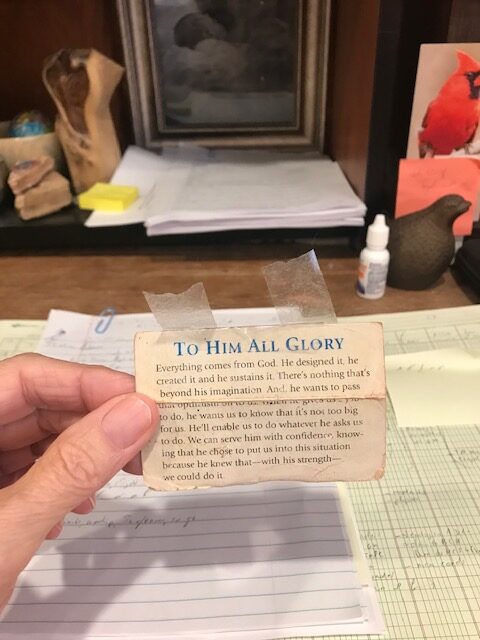
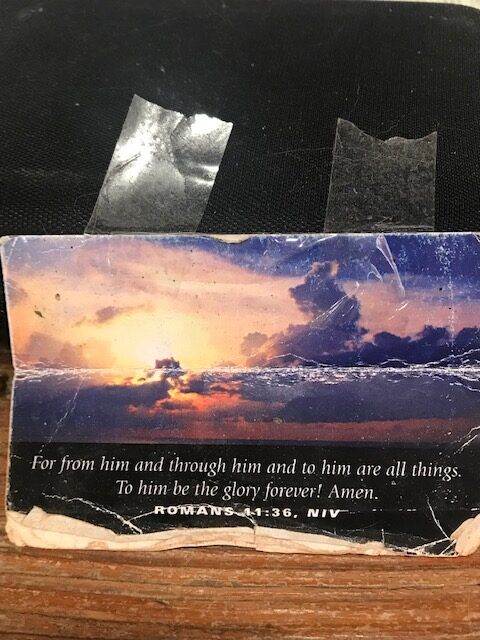
 I finally heard what God was saying. As I paused and just rested with God, I finally understood what I think God was saying to me through circumstances. I think God was reminding me that I had dedicated my life and my work to God and that I am doing all I can for Him, the best I can, so I can know that He IS indeed leading my steps. Furthermore, far from condemning my weaknesses, such as a tendency to dread hard things and to fret, God feels great compassion toward me and He will help me with my specific weaknesses , just as a father watches and knows just when his toddler needs to be picked up and carried.
 “The trouble with life is that it is so daily.” (Chuck Swindoll) I must remind myself often that the everyday tasks of daily life—making breakfast, fetching home the groceries, housecleaning, paying bills, getting the car repaired—are as much a part of my life for God as when I am privileged to be seated at my desk writing. I must remember that God cares about the minutes and hours of the activities of my daily living as much as when I am doing something specifically for Him.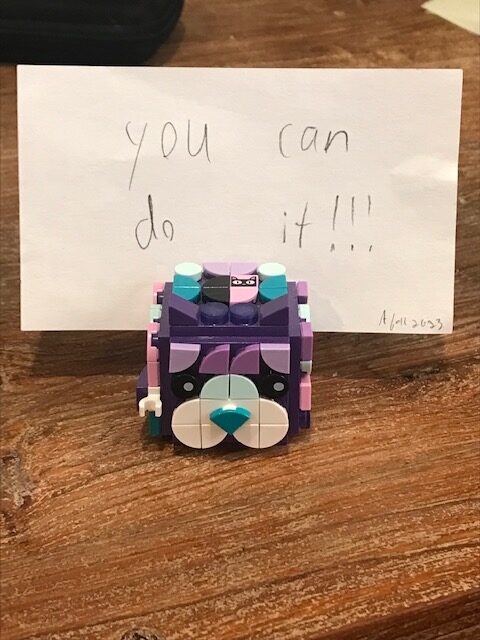

 This Artic blast did not surprise God. This current Artic blast has brought dangerously cold temperatures to much of the United States, including Texas. In situations that could cause fear, it is comforting to remember God’s omnipotence. Just do a search on your computer for “Scriptures about God’s omnipotence.” I also love to review Chapters 38 through 41 in the book of Job. Notice especially Job 38:22-23, when God asks Job:
 Pray for our dams and waterways. Also on the same Flashpoint podcast, Dutch Sheets shared the need to pray for protection of our dams and waterways from terrorists. Curiously, Facebook declined to post Dutch’s “GiveHim15” podcast, but you can see Dutch’s comments at about minute 38 of the January 16 Flashpoint podcast, as well as on Rumble.
 “Are you fearful, like me?” is a trick question, sort of. I wanted to get your attention. I am not fearful in the sense that I know God is sovereign, I know that He is loving and faithful, and I know that not one word of all His promises ever fails. Yet, because I am human, feelings of all kinds occasionally splash up, like waves on seaside rocks. And, sometimes if I do not run to God quickly enough, feelings overwhelm my soul, as surely as the tide overwhelms (ah! but only temporarily) the ever-shifting shoreline.
 God will provide a way of escape. How comforting that last part of Verse 13 is! Read it again. No matter what temptation we face, God has promised He will not let it be more than we can endure and He will make a way out of it, a “means of escape to a safe landing place.” I like to think of that as a child running into his father’s strong and loving arms.
 And how do we do that? By keeping His Word in our mind – constantly. Three years ago, I was just starting to learn how to maintain healing from life-controlling depression and fear. What brought healing? Diligent, daily meditation on God’s Word. Desperation led me to meditate on comforting Bible verses hour after hour, all day long, during every free minute, every day, week after week, month after month. As I did that God’s Word healed my heart when all else had failed.
 Verse 25-26. With that in His listener’s minds, God, our Holy and loving God, then asks, “To whom will you compare Me? Or who is My equal?” Look up at the sky and think about Who made the heavens. Think about Who calls each star by name and keeps them all, right where they are.
 But what if we have no hope? What if we are not confident God will answer? God understands the heart. That is why He told us It only takes a mustard seed size bit of faith (Matthew 17:20). I believe that is why He included Mark 9:14-25 in the Bible, that story of the boy horribly afflicted by an unclean spirit. When Jesus told the boy’s desperate father anything is possible, the father cried “I do believe; help me overcome my unbelief.” (NIV) That’s how honest we must be with God.
 We start the process of waiting with hope and expectation by taking a leap, by choosing to believe and by saying I will trust that God will rescue me. Consider Psalm 91. If we dwell in the secret place of the Most High (verse 1) and if we say ‘God is my refuge and my fortress and I trust Him with confidence’ (verse 2), then all the promises in the rest of Psalm 91 apply. I must declare, or say explicitly, that I am trusting in God, with confidence. That is active faith.

 Thirty years ago I had been driving home from my secretarial job where I sat outside the door of a sarcastic, mean, and hyper-critical boss. I was feeling sorry for myself, dreading sitting down with the bills when I got home where I would have to stretch my single-parent income beyond belief, and angry that my daughter, at age 15, worked at McDonald’s so she could have extras like magazines, make-up to experiment with and an occasional movie. There, bumping along on the side of the road, in the uneven dirt, was a young man in a wheelchair. There were no feet propped on the footplates of the wheelchair.
 Like a pouting little child stamping her foot, I had, finally, looked up at my Heavenly Father and raised my arms to Him. And, like the father of the prodigal who was eagerly watching for his son to return, God ran.
 Oh, those foxes, those little foxes! [My heart was touched and I fervently sang to Him my desire] Take for us the foxes, the little foxes that spoil the vineyards [of our love], for our vineyards are in blossom.” (Solomon 2:15, AMPC). When I look back now, now that I have, by grace, regained peace, the problems that made me stumble seem so little. I am sure you could write a similar list. Mine was ongoing and worsening back problems; no funds to cover the treatment that might help; ongoing and worsening foot problems related to that; the need for minor foot surgery in two weeks, surgery that would further complicate all the back problems when I could not exercise for a while afterwards; having to wait three weeks for insurance to cover new eyeglasses; worsening eye pain and strain each day, not knowing if that was caused by the need for new glasses or cataracts or dry eye, the expensive remedy for which insurance also did not cover.
 [1] Ask God to forgive me for my wrong attitudes and complaining and ingratitude. Two verses I greatly value are: 1 John 1:9, which says “If we confess our sins, He is faithful and just to forgive us our sins, and to cleanse us from all unrighteousness. (NIV)” So simple. So necessary. The second is Proverbs 28:13 which teaches us that “Whoever conceals their sin does not prosper, but the one who confesses and renounces them finds mercy.” In doing that, we humble ourselves under God’s mighty hand and He will lift us up in due time, as He promises in Peter 5:6-7.
 [3] Ask God to impress the lesson of this painful experience deeply on my heart. Psalm 103:18 in the AMPC has a vital lesson for me. Verse 17 says that “. . . from everlasting to everlasting the Lord’s love is with those who fear Him. . . “(NIV) The thought continues in verse 18: “to such as keep His covenant—hearing, receiving, loving and obeying it; and to those who [earnestly] remember His commands to do them [imprinting them on their hearts] (emphasis added). To me this verse says that when we earnestly, whole-heartedly, lovingly obey the Lord we imprint, or write, His word on our heart. This is part of the new covenant we now have through Jesus that God explains in the book of Hebrews. In Hebrews 10:16 God says “I will imprint My laws upon their hearts, and I will inscribe them on their minds (on their inmost thoughts and understanding.)” (AMPC)
 [4] Thank Him for His loving discipline (Hebrews 12). In times of trial, whether we are partly the cause or not, it is well worth taking time to ponder the truths of Hebrews 12:1-13 and John 15:1-17. God uses hardships to train us, for our good, so that we may share in His holiness (Hebrews 12:10b). He trims or removes from our lives the things that bear no fruit and He also works with the things that do bear fruit so that those things may bear even more fruit (John 15). Clearly, some of my branches needed to be cut off and thrown away. However, God was lovingly working with my heart so that the faith, hope, trust, and self-control I had would increase.
 Even when we, being so very human, let wrong thoughts stay in our heart, God is not mad at us any more than a parent is mad with children who react in childish ways. He just longs to lift us up and restore us to His side. Think of how often He forgave the Israelites as they wandered in the wilderness and then when they lived in the land He had promised.
 The lilies that live in the field,
 Throughout the Bible, God’s presence is associated with thunder. Job 40:9 asks “Have you an arm like God? Or can you thunder with a voice like His?” Think of God’s appearances to Israel in the desert. For example, in Exodus 19:16, after Moses had in obedience to God’s instructions consecrated the people, “On the morning of the third day there was thunder and lightning, with a thick cloud over the mountain, and a very loud trumpet blast. Everyone in the camp trembled.” Slowly read Psalm 29 for another description of the power of God’s voice.
 [31] At the voice of the LORD the Assyrians will be stricken with dismay and terror, when He smites them with His rod. In pondering Exodus 14, which tells how God delivered Israel by parting the Red Sea and then closing it up again to destroy the pursing army of Egypt, I often wondered how wide the pathway through the sea was. No one knows for sure but I believe God made it so that everyone who walked through that path was close enough to see the water, maybe even feel the spray from it, so that they would deeply experience the awe and wonder of what God was doing for them.
 Celebrating with loved ones is particularly meaningful, leaving lingering, pleasant memories. I can still smell the rich aroma of the coffeehouse that my daughter and son-in-law took me to when we celebrated my graduation. I can still see their smiling faces looking at me across the tiny table. They took time out of their daily life to celebrate with me.
 I have told you these things, so that in Me you may have [perfect] peace and confidence. In the world you have tribulation and trials and distress and frustration; but be of good cheer [take courage; be confident, certain, undaunted]! For I have overcome the world. [I have deprived it of power to harm you and have conquered it for you.” (AMPC)
 Sharing a personal application: Just as Israel turned to Egypt for help, when I was severely depressed a few years ago I turned to worldly methods first, rather than God. I was as rebellious as Israel. For years, God had been telling me through Bible teachers to dig deeper into, to meditate on and to speak His Word all day long, to the point of what many call extremism. For years, teachers and preachers who had overcome great personal problems stirred my spirit. I felt God’s anointing for me on their teaching. And they all stressed depending on God’s Word FIRST. They talked little if any about psychology.
 While I was struggling so desperately with depression, unfortunately, my actions said I doubted God’s Word would heal my heart. When I finally did begin studying His Word for healing, at first I still tried to get it second hand by diligently studying the teaching of others. It was only when I sat down alone with God, my Bible and a concordance and began diligent study as well as meditation on God’s truths about fear, peace, and His great love for me personally that healing began.
 This book shows you how to use God’s Word to heal your heart, regardless of your problem, and walk closer to Him. My sincere prayer is that God uses it to speak to you, personally, in the ways only He knows you need. Friend, He really, really loves you!